
The rent in a Florida apartment listing is often only the first number. Application charges, shared utilities, pet rent, amenity fees, and move-in costs can change the monthly total fast. This apartment hidden fees guide breaks down 10 charges to check, plus a lease checklist you can save before signing.
1. LeaseGuard AI
LeaseGuard AI is an AI-powered residential lease reviewer for U.S. renters who want plain answers before signing. It scans the lease and its addenda for fees, risky clauses, and tenant-protection concerns.
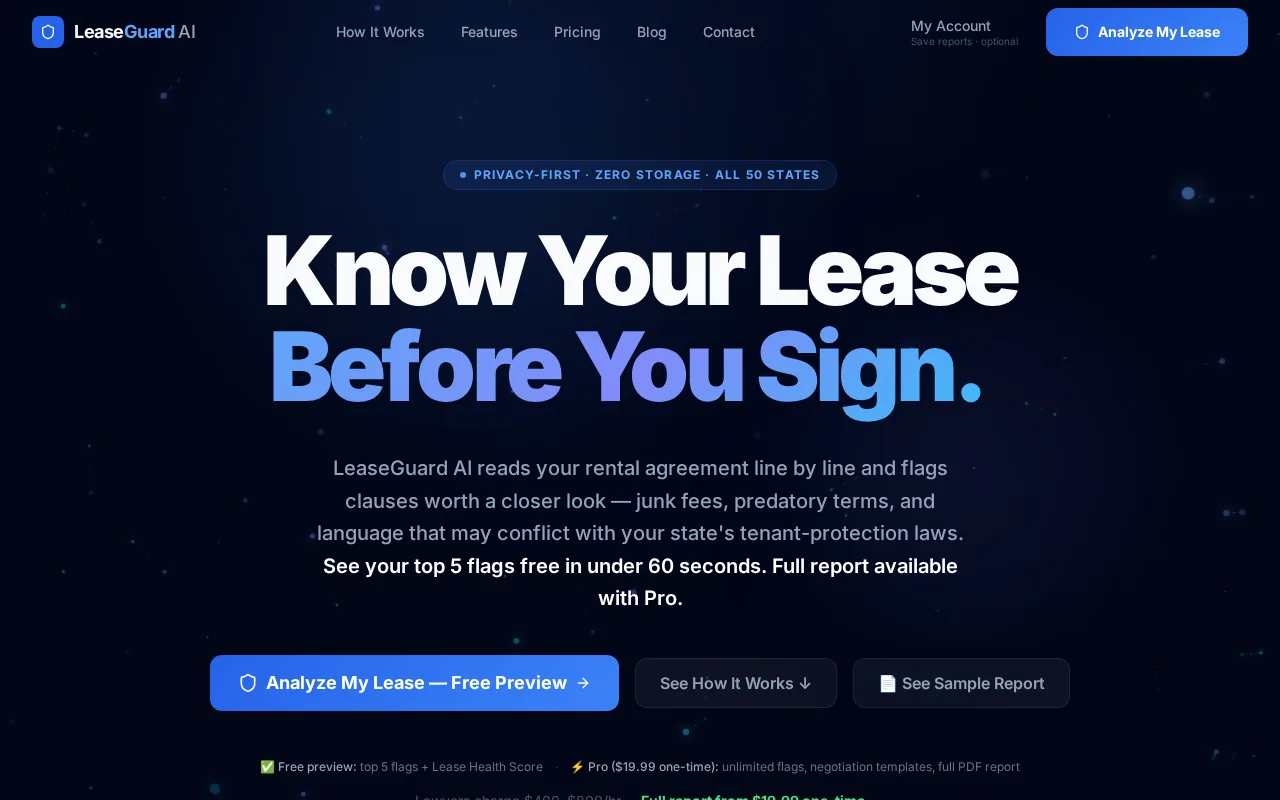
That matters in Florida because key charges may sit in a pet addendum, utility addendum, parking form, or damage-waiver document. A quick read of the first page won't catch every cost. LeaseGuard AI can point out where a fee appears, explain what it means, and give you questions to raise with the landlord.
Use it after you receive the full lease package. The best review covers every page, not only the rent section. LeaseGuard AI provides informational analysis only; it is not a law firm.
For a broader look at the clauses worth checking, see this lease agreement review guide. It explains why addenda deserve the same care as the main lease.
2. Security Deposits, Confirm the Amount, Use, and Refund Rules
Security deposits are one of the largest upfront costs in an apartment hidden fees guide. A median deposit was $795 in 2025, and 83% of renters pay one.
Ask four questions before you send money:
- What exact amount is due?
- Is any part labeled nonrefundable?
- What can the landlord deduct at move-out?
- When and how will the balance be returned?
In Florida, the lease should make the deposit terms clear. Check the deposit clause carefully, then keep photos of the unit before moving in. The rule can depend on how the landlord holds the deposit and whether deductions are claimed.
A deposit is different from a move-in fee. One may be refundable. The other may not be. Don't treat those labels as interchangeable.
3. Pet Fees and Pet Rent, Separate One-Time Charges From Monthly Costs
Pet charges can include a one-time fee, a refundable pet deposit, monthly pet rent, or more than one of these. Your apartment hidden fees guide should treat each line as a separate cost.
Write the math out. A one-time fee feels different from a monthly charge, but both affect your move-in budget. Monthly pet rent also adds up over a long lease. Ask whether the fee applies per pet or per unit.
Read the pet addendum for weight limits, breed rules, animal approval terms, and cleaning charges. If you have an assistance animal, don't assume standard pet rules apply. Ask for the property’s accommodation process and keep your request in writing.
Florida renters can compare pet rent with a one-time charge. The cheaper choice depends on how long you expect to stay and whether the charge is refundable.
The useful test is simple: can you name every pet charge before you sign?
4. Utility and Submetering Charges, Find Out How Shared Costs Are Split
Utility fees are easy to miss because the listing may show rent without water, sewer, trash, or billing costs. A Florida apartment may use an individual meter, a submeter, or a shared allocation formula.
Ask how the property measures your use. If the building lacks a separate meter, the bill may use unit size, occupancy, or another formula. You need that formula before you can judge whether the charge is fair.
Request a sample bill with the tenant’s personal details removed. Check for:
- Water and sewer charges.
- Trash or valet service fees.
- Utility billing or account fees.
- Administrative markups.
Don't accept “utilities vary” as the whole answer. Ask for the last few typical bills for a similar unit, if the property will share them. Then add the estimate to rent when comparing apartments.
For a Florida-focused list of utility markups and addenda to inspect, review the Florida apartment hidden-fee breakdown. Use it as a prompt for questions, not as a substitute for checking your lease.
5. Renter’s Insurance Costs, Check Required Coverage and Add-On Fees
Required renter’s insurance can add a monthly premium or a property-run coverage fee. Look for the required coverage amount, proof deadline, deductible rules, and any charge for failing to upload a policy.
Some leases let you use your own insurer. Others enroll you in a policy if you don't provide proof. That default coverage may cost more than a policy you choose yourself, so ask how to opt out.
Check whether the fee covers insurance or only a compliance service. Those are different things. Also ask if the policy covers your belongings, liability, or only the landlord’s interest in the building.
Keep your insurance certificate with the signed lease. If the property changes its proof system, you can show when you met the requirement.
6. Moving and Relocation Expenses, Budget for Costs Outside Monthly Rent
Moving costs can begin before your first rent payment. Look for application charges, holding deposits, move-in fees, elevator reservations, key deposits, utility connection deposits, and required cleaning fees.
Ask for a complete move-in cost sheet. It should show which charges are one-time, which are refundable, and which repeat each month. If the property requires a specific moving window, ask whether missed or changed appointments carry a fee.
Florida weather can add another planning issue. Read clauses about storm damage, temporary relocation, power loss, and access to the unit. A lease may assign duties that are separate from ordinary moving costs.
One useful habit is to save every receipt in one folder. That gives you a record if a fee later appears under a different name.
7. Broker or Agent Commissions, Verify Who Pays and When
Broker fees are not always part of the advertised rent. If an agent is involved, ask whether the renter pays a commission, when it is due, and whether it is refundable if the application fails.
Get the commission agreement in writing before you apply. It should name the amount or method used to calculate it. Ask if the fee applies when the landlord rejects the application or when you decide not to sign the lease.
Don't confuse a broker fee with an application fee or an administrative fee. Each should have its own label and explanation. If one document uses several names for the same charge, ask the agent to clarify the difference.
The safest rule is to pay only after you understand what service the fee covers and what event makes it due.
8. Parking and Storage Fees, Price the Space, Access, and Deposits
Parking and storage fees can sit in separate forms. Price the space itself, then check for gate remotes, access cards, reserved-space deposits, guest parking rules, and replacement charges.
Ask whether the parking spot stays with the apartment if you renew. Also ask what happens if the lot fills, your vehicle changes, or the property moves your assigned space.
Storage rules may include limits on unit size, insurance, access hours, and prohibited items. A low monthly price is less useful if access is limited or the deposit is large.
Write the spot number and storage unit number into your records. Small details can prevent a dispute during move-out.
9. Lifestyle and Amenity Fees, Identify Recurring Charges for Extras
Amenity fees may cover a gym, pool, package service, trash pickup, pest control, or online rent payments. These charges can appear as a monthly technology fee or bundled service package.
Ask whether the fee is mandatory. If you won't use the gym or package room, that may not remove the charge, but it gives you a point to negotiate. Compare the full monthly total with another property that lists a higher base rent but fewer add-ons.
Also check whether the property can raise the amenity fee during the lease. Look for words such as “subject to change,” “current rate,” or “additional services.” Ask for advance notice rules.
A fee for an amenity you cannot use may still be allowed by the lease. The key question is whether the charge was disclosed clearly before signing.
10. Internet, AC Deposits, and Vampire Costs, Catch Fees Buried Later
Some rental costs show up after approval. Internet restrictions, required providers, AC deposits, electricity deposits, lease renewal fees, and move-out charges can hide in later pages or addenda.
Ask which internet providers serve the building and whether the property requires one service. Then ask for the full monthly cost, equipment charge, installation fee, and early-cancellation rule. A low advertised rent doesn't help if the internet choice is limited and costly.
AC or electricity deposits depend on the property and utility setup. Don't assume every deposit is refundable. Ask who holds it, what event triggers a refund, and whether the amount can change.
These are “vampire costs” because they drain money after the first budget check. Scan for phrases such as:
- “Additional charges may apply.”
- “Tenant is responsible for all service fees.”
- “Rates are subject to change.”
- “As required by the provider.”
Mark every vague clause for review. A landlord should be able to explain the amount, timing, and reason for each charge.
Apartment Hidden Fees Comparison Table, What to Check at a Glance
Use this table as a screening tool. The exact amount depends on the property and lease. A typical application fee is $50, and the median security deposit was $795 in 2025.
| Fee | When it appears | Ask before signing | Record to keep |
|---|---|---|---|
| Application | Before screening | Is it refundable? | Receipt and written terms |
| Security deposit | At approval or move-in | What can be deducted? | Photos and deposit notice |
| Pet charges | Before move-in or monthly | Fee, rent, or deposit? | Pet addendum |
| Utilities | Monthly billing | Individual meter or allocation? | Sample bill |
| Insurance | Monthly or enrollment | Can I use my policy? | Coverage certificate |
| Parking and storage | Move-in or monthly | Is access included? | Space agreement |
| Amenities and internet | Monthly or later addendum | Is the fee mandatory? | Fee schedule |
Downloadable Florida Apartment Fee Checklist
Save or print this list before you apply. Check each line against the lease and every addendum.
- Base rent and rent due date.
- Application and administrative fees.
- Security deposit amount and refund terms.
- Pet fee, pet rent, and pet deposit.
- Water, sewer, trash, and utility billing method.
- Renter’s insurance requirement and opt-out process.
- Parking, storage, gate, and access-card costs.
- Internet provider limits and equipment fees.
- Amenity, technology, package, and pest-control fees.
- Move-in, move-out, cleaning, and elevator charges.
- Renewal, late, early-termination, and transfer fees.
- Every addendum attached to the lease.
FAQ
How much is a typical apartment application fee?
$50 per application is a typical amount. The exact charge can vary by property and location. Ask whether the fee is refundable, what screening it covers, and whether another fee appears after approval. Keep the receipt with your application records.
Can an apartment charge both pet rent and a pet fee?
An apartment may list both a one-time pet fee and recurring pet rent, depending on the lease and applicable rules. Don't assume one replaces the other. Ask whether each charge applies per pet, whether either is refundable, and how the total changes over your planned stay.
How do I check shared utility fees?
Ask whether your unit has its own meter and request the billing formula if it does not. Shared bills may use occupancy, unit size, or another allocation method. Request a sample bill, then check for billing fees or markups. The lease should explain who bills you and when.
Before you sign, calculate the full move-in cost and the true monthly total. Then upload your lease to LeaseGuard AI for an informational review, and use the flagged clauses to ask clear questions before money changes hands.
This article is general information, not legal advice. Laws vary by state — verify details with your state's landlord-tenant statutes or a licensed attorney.
Check Your Own Lease Now
Everything in this guide applies to leases in general — but your lease may have specific clauses that need their own review. Upload it free.
Analyze My Lease — Free