
Florida leases can hide expensive terms in plain sight. One example: an early-termination fee may not exceed two months' rent under the state rules covered here. This apartment lease checklist Florida renters can use puts the highest-risk clauses first, then covers move-in costs, inspections, city questions, and lease review tools.
1. LeaseGuard AI
LeaseGuard AI is an AI-powered residential lease reviewer for renters who want plain answers before signing. It scans a lease for risky clauses, hidden fees, and tenant-protection gaps.
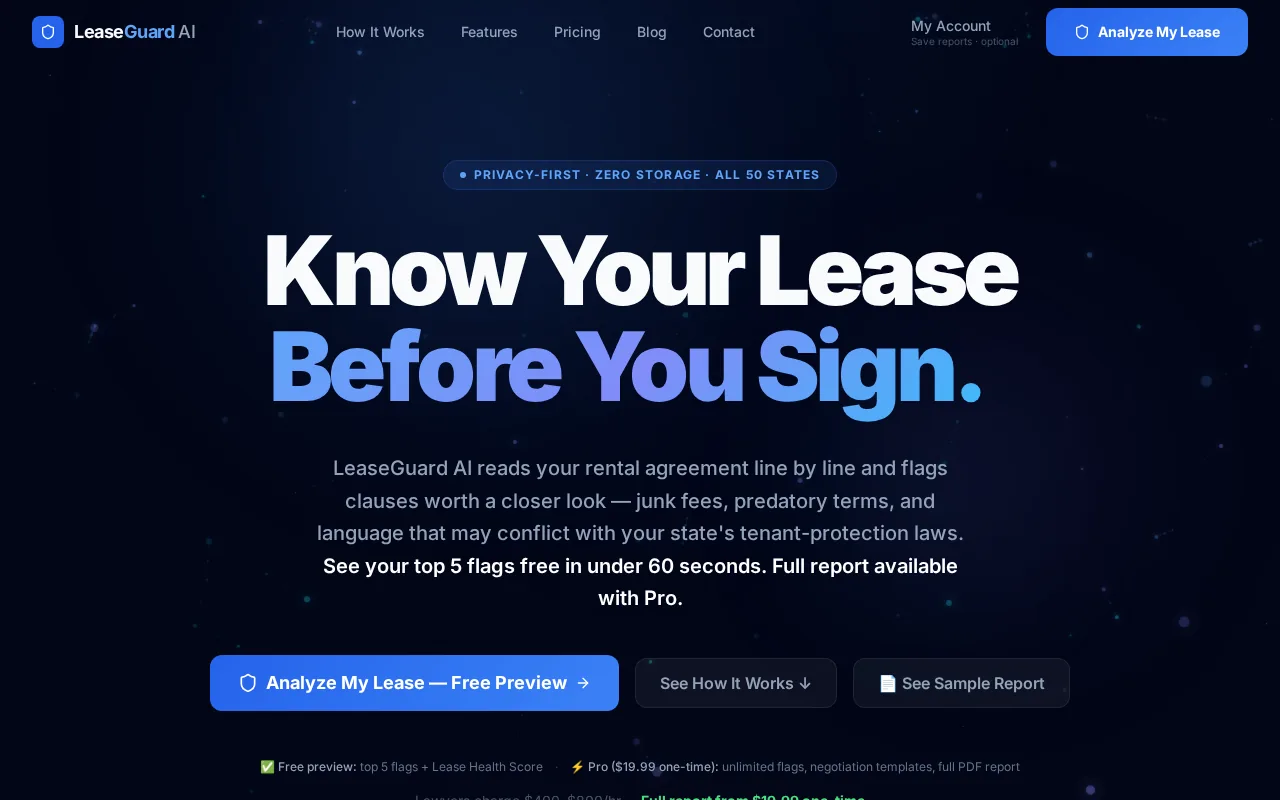
It fits best when you have a long PDF or several addenda to review. A lease may include separate rules for pets, parking, utilities, insurance, storm damage, or an HOA. Missing one page can change your true monthly cost.
LeaseGuard AI turns those terms into a plain-language report. It can also provide negotiation guidance tied to the issue it finds. That gives you a cleaner starting point for questions such as, “Is this fee stated clearly?” or “Can this early-exit charge be changed?”
It isn't a law firm or a substitute for legal advice. LeaseGuard AI provides informational analysis only; it is not a law firm. Use the report to spot issues and ask better questions before you sign.
For a faster first pass, upload the full lease package rather than only the page that shows the rent.
2. Security Deposit Claim Notice Requirement, Protect Your Move-Out Money
This apartment lease checklist Florida renters use should include the security-deposit claim notice. If a landlord plans to keep part of your deposit, the landlord must mail notice of the claim within 30 days after you move out.
The key action is simple: keep your forwarding address current and save the envelope, letter, and delivery record. If the notice never arrives within the required window, ask for an explanation in writing. For additional information, review this information.
Before signing, check the deposit amount and the section that explains deductions. Florida does not set one general maximum deposit amount, so the lease should state the exact figure and when it is due.
3. Security Deposit Objection Period, Track the 15-Day Deadline
The second deposit pick is the 15-day objection period. After receiving a landlord's claim notice, a tenant must object in writing within 15 days if the deductions are disputed.
Do not rely on a phone call. Write a short objection that identifies the charges you contest, then keep a copy and proof of delivery. Photos from move-in and move-out can help show the difference between damage and normal wear.
This deadline is easy to miss during a move. Put the date on your calendar as soon as the notice arrives. A deposit-rules reference can help you compare the lease wording with the required deposit timelines.
4. Early-Termination Fee Cap, Check for No More Than Two Months' Rent
Florida renters should flag any early-termination clause that has no clear limit. Florida law caps a liquidated-damages or early-termination fee at two months' rent.
Find the clause under terms such as “liquidated damages,” “lease break,” or “reletting.” Check whether the fee is separate from unpaid rent, repair charges, or other amounts. An unlimited fee deserves a written question before you sign.
Ask the landlord to state the maximum charge in dollars or in a clear formula. If your plans may change, negotiate the exit terms while you still have bargaining power.
5. Seven-Day Cure Notice, Review Noncompliance Termination Language
A Florida lease review should flag termination language that skips the seven-day cure period for noncompliance. The cited Florida rule requires written notice giving the tenant seven days to fix the problem before termination for that type of breach.
Read the notice section beside the rules for late rent, unauthorized occupants, pets, noise, and property damage. The lease may describe separate remedies for different breaches, so do not assume one notice rule applies to every dispute.
The video below adds a useful inspection angle. Before signing, ask how the property handles routine inspections and what condition the landlord expects at move-out.
Take photos when you get the keys. Include walls, floors, windows, appliances, bathrooms, air-conditioning vents, and outdoor areas. Email the photos to yourself so the date is easy to prove.
6. Late-Fee Structure, Verify the Amount, Trigger, and Disclosure
Late fees belong near the top of any Florida apartment lease checklist. The lease should state the amount or formula, the date the fee starts, and whether any grace period applies.
Compare the lease's charge with the current state rule rather than trusting a vague phrase such as “reasonable late fee.”
Also check for daily fees or compounding charges. A small daily amount can become a much larger demand within a week. The fee should be visible in the written lease, not introduced later through an unexplained portal charge.
A general Florida apartment hidden-fee checklist is useful when the main lease sends you to several addenda. Add up recurring fees before comparing one apartment's rent with another.
7. Uniformed-Services Disclosure, Confirm the Required Lease Provision
Florida rental applications and agreements must include a provision stating whether the applicant is a member of the uniformed services. Check both the application and the final lease if you applied online.
This is a disclosure check, not a reason to share more personal information than the form asks for. If the provision is missing, ask the property manager to add or correct it before you sign.
Keep the submitted application with the lease. A saved PDF gives you a record of what the property asked you to confirm.
8. Lien-Rights Language, Flag Clauses That Attempt to Waive Rights
This less familiar item deserves a place on a Florida lease checklist because some clauses may try to waive or limit tenant rights. The lien provisions in sections 83.801 through 83.809 do not affect the parties’ right to create liens by special contract or agreement.
Do not guess what a lien clause means. Highlight wording about waivers, property claims, or rights being surrendered, then ask for a plain-language explanation. If the answer is unclear, get legal advice before signing.
A lease reviewer can flag unusual wording, but a lawyer should handle a dispute about legal rights or a pending claim.
9. Florida Apartment Essentials, Compare Rent, Deposits, Amenities, and Responsibilities
The legal clauses matter, but the apartment must fit your budget and daily life. Start with the full move-in amount, not the advertised rent. Ask for every recurring charge in writing.
- Monthly rent and renewal terms
- Security deposit or fee in lieu of a deposit
- Application, administration, parking, trash, pest control, and amenity fees
- Pet deposit, pet rent, breed rules, and guest limits
- Water, sewer, electric, internet, and other utility duties
- Renters insurance requirements and storm-damage rules
Tour the actual unit if possible. Check the air conditioner, appliances, faucets, drains, windows, locks, outlets, and signs of leaks or mold. Ask who handles repairs and how requests are submitted.
Also ask about pool access, gym hours, package storage, parking, pet areas, trash pickup, quiet hours, and HOA rules. A cheap base rent can look different after mandatory charges are added.
Before signing, compare your notes with the written lease. If a leasing agent promised a repair, free parking, or a waived fee, get that promise added to the agreement or an addendum.
10. Florida City Lease-Fee Snapshots, Miami, Kissimmee, St. Cloud, Orlando, Tampa, Jacksonville, and Tallahassee
Miami, Kissimmee, St. Cloud, Orlando, Tampa, Jacksonville, and Tallahassee follow the same statewide baseline for the Florida provisions covered in this checklist. City names can change the market, building rules, or add-on fees, but they do not erase the state lease terms.
Miami
Ask for the complete fee sheet, including parking, valet trash, amenity access, pet charges, and utility billing. Confirm the deposit terms and early-exit fee in the lease. If flood or storm risk affects the unit, ask who pays for repairs and what happens if the home becomes unlivable.
Kissimmee
Vacation-area demand can make move-in dates and community rules important. Ask whether the unit is covered by HOA rules, whether guest limits apply, and whether utilities are billed directly or through a shared formula. Save every fee quote before paying an application charge.
St. Cloud
Check the cost of parking, trash service, pest control, and pet care beside the base rent. Ask to see the exact unit and record appliance condition. Put the inspection date and forwarding-address process in your move-out notes.
Orlando
Rental screening may ask for income records, identification, rental history, and other documents. Ask if income is measured per applicant or across roommates. Before applying, confirm the application fee, deposit, required insurance, and availability date.
Tampa
Ask direct questions about storm preparation, flood disclosure, air-conditioning repairs, and temporary relocation. Check whether parking, amenity use, or utility billing appears in an addendum rather than the main lease.
Jacksonville
Confirm who handles lawn or exterior duties if you rent a townhouse-style unit. Review guest, roommate, pet, and subletting rules. Request written details for any fee that starts after move-in.
Tallahassee
Students should compare the lease term with the school calendar. Ask if the contract covers the whole unit or one bedroom, how roommate changes work, and whether utilities have caps. A lease that runs beyond your actual stay may trigger an early-termination fee.
Across all seven cities, the best action is the same: request the full lease and every addendum before you pay or sign. Then compare the total cost and high-risk clauses in one place.
Comparison Table: Which Florida Lease Checklist Option Fits Your Situation?
Use the table below to decide where to spend your review time first. Most renters should start with LeaseGuard AI, then verify the legal wording and ask the property manager for changes in writing.
| Checklist option | Best use | What to verify | Main caution |
|---|---|---|---|
| LeaseGuard AI | Full lease and addenda review | Risky clauses, fees, and negotiation points | Informational analysis only |
| Deposit notice | Move-out protection | 30-day claim notice | Keep delivery records |
| Deposit objection | Disputed deductions | 15-day written response | Do not wait for a phone call |
| Early termination | Possible future move | Two-month fee limit | Check for extra charges |
| Late fee | Monthly payment planning | Amount, trigger, and written disclosure | Review daily-fee wording |
| City fee review | Comparing apartments | All recurring and move-in charges | Base rent is not total cost |
FAQ
What should I check first in a Florida apartment lease?
Check the total move-in cost, deposit terms, early-termination fee, late-fee clause, and addenda first. These items can change what you owe or what rights you have. A Florida apartment lease checklist should also cover utilities, insurance, storm damage, renewal notice, pets, roommates, and the move-in inspection record.
Does Florida cap apartment security deposits?
Florida does not set one general maximum security deposit amount for residential leases. The lease should state the exact deposit, how it is held, and when it may be deducted. Keep proof of payment and document the unit's condition before moving in.
How long does a landlord have to claim a security deposit in Florida?
A landlord generally must mail notice of an intent to impose a claim within 30 days after the tenant moves out. If you receive that notice, review each charge and object in writing within 15 days if you disagree. Keep copies and proof of delivery.
Conclusion
Start with the clauses that can cost you money or shorten your time to respond: deposits, late fees, early termination, notices, and addenda. Upload your complete lease to LeaseGuard AI for a plain-language review, then ask the landlord to confirm any unclear term in writing before you sign.
This article is general information, not legal advice. Laws vary by state — verify details with your state's landlord-tenant statutes or a licensed attorney.
Check Your Own Lease Now
Everything in this guide applies to leases in general — but your lease may have specific clauses that need their own review. Upload it free.
Analyze My Lease — Free