Can a landlord charge for painting after you move out? Sometimes, but a landlord usually can't bill you for faded paint or routine turnover. The key questions are whether you caused damage, what your lease says, how old the paint was, and whether the deduction is backed by proof.
Rules vary by state. Most states allow a reasonable charge for tenant-caused damage. Delaware is an outlier because it doesn't permit a painting charge, while California limits deductions with strict proof and useful-life rules.
When Can a Landlord Charge for Painting?
In most states, a landlord can charge for painting when your actions caused damage beyond normal wear and tear. The charge may come from your security deposit if the landlord follows the state's notice rules and can show the cost is reasonable.
Examples of damage that may support a deduction include large holes, deep gouges, heavy stains, smoke residue, candle soot, marker, crayon, or pet damage. Painting a room a new color without written permission can also lead to a charge if the lease requires you to restore the original color.
The question isn't simply whether the landlord painted after you left. Many landlords repaint between tenants as routine upkeep. That cost usually belongs to the property owner. The better question is whether your conduct made the work necessary.
A deduction should also match the damage. If one bedroom wall has a large hole, a charge for repainting the whole unit deserves close review. Ask why each room needed work and request the invoice, estimate, or other cost record.
The basic purpose of a security deposit is to protect the landlord against defined losses, not to fund ordinary upgrades. State law controls the exact deadlines and remedies, so don't rely on a broad lease clause alone.
Normal Wear and Tear, Damage, and Paint Depreciation
Normal wear and tear is the slow change that comes with ordinary living. Faded paint, dull walls, light furniture scuffs, and a few small nail holes often fall into this group. A landlord generally can't shift those routine costs to the departing renter.
Damage is different. A wall with several large anchor holes, a broad grease stain, or an unauthorized dark paint color may need more than normal turnover work. In that case, the landlord may have a claim, but the amount still has to reflect the actual condition.
Paint also loses value with age. This is called depreciation or useful life. If the paint was already old when you moved in, charging you the full price of fresh paint could give the landlord a new improvement at your expense.
California guidance puts interior paint's useful life at about two to three years. Its rules also require proof of damage beyond ordinary wear. The landlord must support the deduction with photos and an itemized statement. Other states may use different methods, so treat that figure as a California reference, not a national rule.
Think of the math this way: a tenant may owe some part of a repair when fresh damage harms paint that still has useful life. The tenant shouldn't normally pay the full replacement cost for paint that had already reached the end of its expected life.
Use these questions to test the charge:
- Was the condition worse than what the move-in record showed?
- Did your conduct cause the problem?
- How old was the paint when you moved in?
- Did the landlord charge for one wall, one room, or the whole home?
- Does the amount match an actual repair?
For example, a charge labeled “full repaint” may hide a routine refresh. A charge for patching and repainting one damaged wall is easier to connect to a tenant-caused loss.
What the Lease Says About Painting and Repainting Costs
When asking can a landlord charge for painting, start with the lease and every addendum. Look for terms about decorating, wall color, holes, inspections, cleaning, repairs, and security deposit deductions.
A lease may require written permission before you paint. It may also say that you must return the walls to their original color. That clause can support a charge when you paint without approval, but it doesn't automatically let the landlord charge any amount for any repainting.
Read the wording closely. “Tenant pays all painting costs” is broader than a clause tied to damage caused by the tenant. A broad term may still be limited by state law, especially where the law excludes normal wear and tear or requires an itemized deposit claim.
Verbal permission can help, but written permission is safer. If the landlord agrees that you can paint, save the message. Ask who buys the paint, which colors are allowed, and whether you must restore the walls at move-out.
LeaseGuard AI can scan a rental agreement for risky fees and tenant-protection issues, including clauses that may affect painting charges. It gives renters a plain-language report before they sign. This lease-reading guide for renters can help you find the clause before a dispute starts.
Local rules may also matter. Most jurisdictions don't require a full repaint after every tenancy. Some local housing rules can set maintenance standards or repaint schedules, so a lease cannot be read in isolation.
Proof Landlords Need and Records Renters Should Keep
A landlord asking for painting money should be able to explain what was damaged, why painting was needed, and how the amount was calculated. A vague line such as “paint damage” gives you little to check.
Useful landlord records may include:
- Move-in and move-out inspection reports.
- Dated photos of the alleged damage.
- An itemized deduction notice.
- Paint or repair invoices.
- Contractor estimates when the work has not happened yet.
- The date the property was last painted.
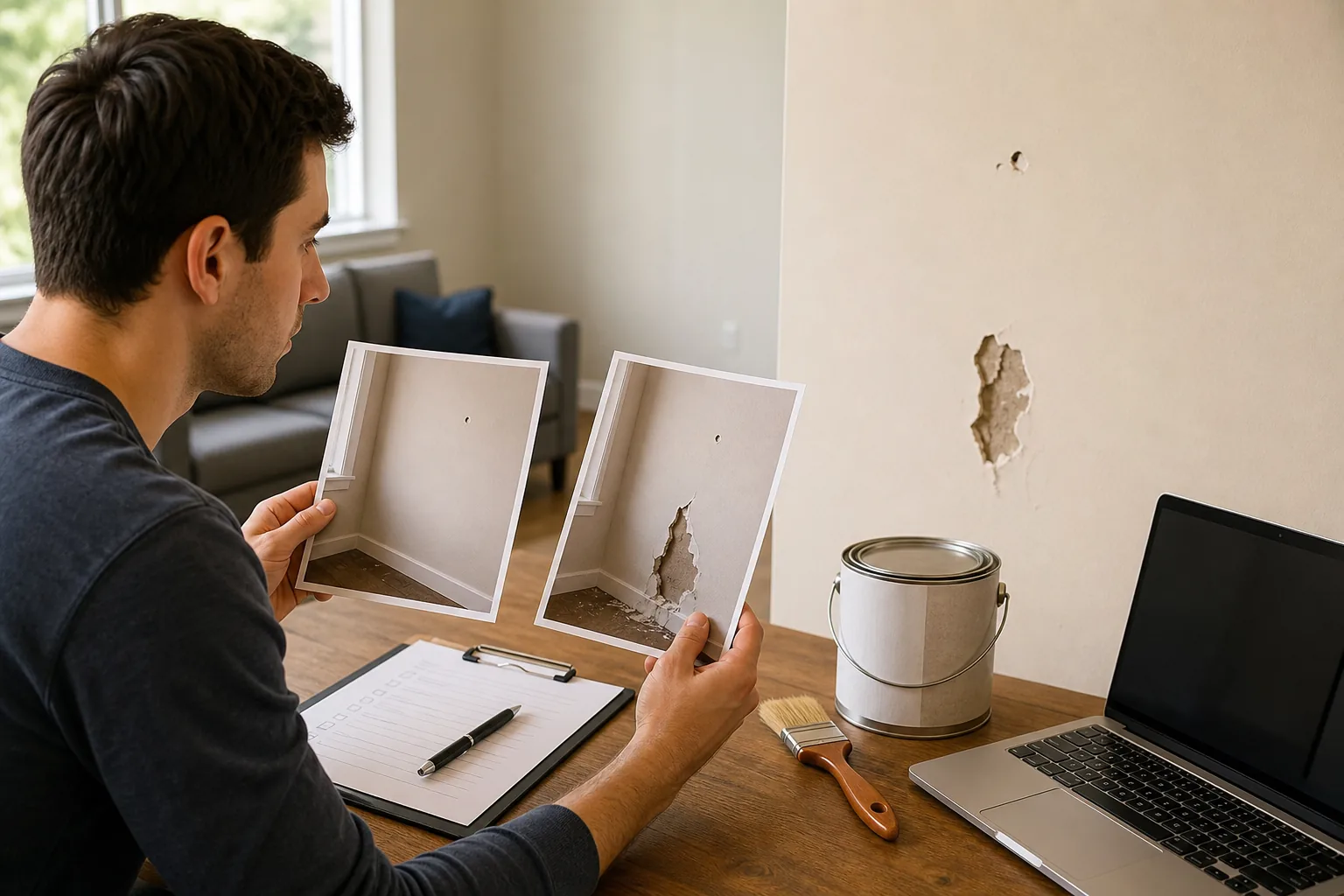
Renters should build the same paper trail. Photograph every wall before moving in. Take close images of existing marks, then email the files to yourself so the date is easier to show. Repeat the process after cleaning and before returning the keys.
Keep the lease, addenda, inspection form, rent ledger, forwarding address, key-return proof, and every message with the landlord. If a phone call happens, send a short follow-up email that records what was said.
Deadlines matter. The exact period differs by state. In California, the cited source explains a 21-day deadline for returning the deposit or sending an itemized statement. California also requires photos with deductions under its newer rules. That state-specific requirement should not be treated as a rule for every renter.

How to Challenge an Unfair Painting Deduction
If the charge looks wrong, challenge it in writing. Stay calm and focus on the facts. Your goal is to make the landlord explain the claim or return the unsupported amount.
- Gather the file. Collect the lease, deposit receipt, move-in photos, move-out photos, deduction notice, invoices, and key-return date.
- Check the deadline. Find your state's deposit-return rule. Compare it with the date you moved out and gave your forwarding address.
- Compare conditions. Put the move-in and move-out images side by side. Mark damage that was already present and damage that changed during the tenancy.
- Ask for detail. Request the location of each damaged area, the repair record, the paint's age, and the reason the landlord repainted beyond that area.
- Send a written dispute. State the amount you dispute and why. Attach only the key proof, while keeping the full file for yourself.
- Escalate if needed. Consider mediation, a tenant legal-aid group, or small claims court if the landlord refuses to correct an unsupported deduction.
Keep your letter specific. Instead of saying “the charge is unfair,” write: “The move-in photos show the same marks on the bedroom wall, and the deduction notice doesn't identify a repair cost for that wall.” Facts are easier to prove than broad claims.
Use a decision table before you send the dispute:
| What you find | What it may mean | Useful next move |
|---|---|---|
| Faded paint or light scuffs | Likely ordinary wear | Ask for the charge to be removed |
| Large holes or heavy stains | Possible tenant damage | Check scope, proof, and paint age |
| Whole-unit repaint for one damaged wall | Possible overcharge | Request a room-by-room explanation |
| No itemized notice | Possible deadline or proof issue | Check state law and send a written demand |
| Old paint at move-in | Full replacement may be improper | Ask for depreciation or useful-life records |
Don't withhold rent or make a deduction from future rent just because you dispute the deposit. Those actions can create a separate problem. Keep the dispute focused on the deposit unless a qualified local attorney or housing adviser tells you otherwise.
LeaseGuard AI is useful before signing because it can flag risky lease language before it becomes a deposit fight. LeaseGuard AI provides informational analysis only; it is not a law firm.
Frequently Asked Questions
Can a landlord charge for painting after you move out?
Yes, a landlord may charge for painting when tenant-caused damage goes beyond normal wear and tear. Large holes, heavy stains, smoke damage, or unauthorized colors may support a reasonable deduction. The landlord still must follow state deposit rules and should connect the amount to the damaged area rather than routine repainting.
Can a landlord charge for normal wear and tear?
Usually, no. Normal wear includes gradual fading, light scuffs, and minor marks from ordinary living. A landlord may repaint for the next renter, but routine turnover is generally an ownership cost. If your deposit was reduced for ordinary wear, compare your photos with the deduction notice and ask for the charge to be removed.
How does paint depreciation affect a deposit deduction?
Paint depreciation can reduce the amount a landlord may claim because old paint has already lost much of its value. The exact useful-life rule varies by state. California guidance cited here uses about two to three years for interior paint. Ask when the walls were last painted and why full replacement is justified.
What proof should a landlord provide for painting costs?
A landlord should provide an itemized deduction and enough detail to show the damage and cost. Helpful records include dated photos, inspection reports, invoices, estimates, and the paint's age. A vague charge for “repainting” is harder to defend, especially when the landlord bills for areas you didn't damage.
What does LeaseGuard AI scan for?
LeaseGuard AI is an AI-powered lease-review service that scans rental agreements for risky clauses, including hidden painting-charge provisions. It provides informational analysis only; it is not a law firm.
Conclusion
A landlord may charge for painting when you caused damage beyond ordinary wear, but the deduction should be documented, reasonable, and limited to the loss you caused. Save move-in and move-out photos, check the deposit deadline, and review the lease before signing. If you want a plain-language scan of your lease, try how LeaseGuard AI analyzes rental agreements before you commit. Upload your lease and review the flagged terms while you still have room to ask questions.
This article is general information, not legal advice. Laws vary by state — verify details with your state's landlord-tenant statutes or a licensed attorney.
Check Your Own Lease Now
Everything in this guide applies to leases in general — but your lease may have specific clauses that need their own review. Upload it free.
Analyze My Lease — Free