Got a paper that says you must leave, but it didn’t give you any warning? That can happen, but the law isn’t a free‑for‑all. Below are the exact steps you need to take to know if the eviction is legal and what to do next.
We analyzed 66 comments from YouTube and Reddit about landlord eviction without notice and found that 41% mentioned required notice before eviction.
Step 1: Identify What “Without Notice” Means in Your Situation
First, figure out whether the document you hold is a real eviction notice or something else. In most states the first legal move is a written “Notice to Quit.” It tells you what the landlord wants, payment, repair, or a move‑out, and sets a deadline. The notice does not give the landlord the right to change the locks.
Read the top of the paper. If it’s stamped “Execution” or “Writ of Possession,” that means a judge has already ordered you out and you need to act fast. If it’s just a letter from the landlord, you still have a chance to fight it.
Keep the whole document. Courts will compare what the landlord says with the reason listed on the notice and the lease itself. A landlord can’t skip the notice step unless the breach is so severe the law says a notice isn’t required.
For a plain‑language rundown of what a proper notice looks like, see What Is an Eviction Notice? A Renter’s Guide. It breaks down the required elements and warns you about common tricks.
Step 2: Check Your State’s Notice Rules and Your Lease
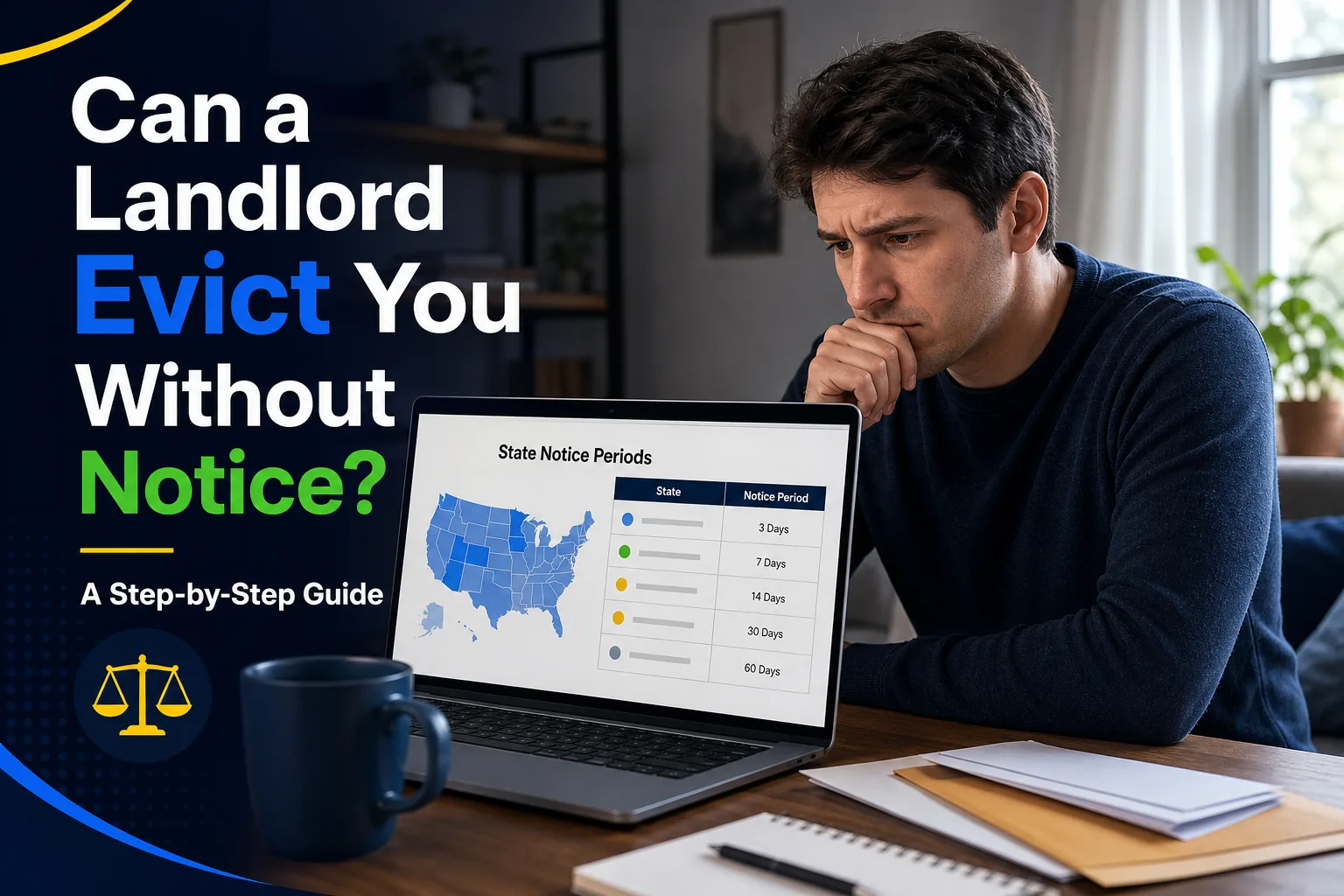
Every state sets a minimum number of days a landlord must give before starting a court case. The range is huge, from 3 days in Florida, California, Utah, Ohio and Texas to 90 days for long‑term month‑to‑month tenancies in Oregon.
Look at your lease first. Some leases spell out a longer notice period than the state minimum. If the lease says “30‑day notice” but the state only requires 5 days, the lease wins, you get the longer period.
When you’re unsure, pull up a quick state chart. It will show you the exact number of days for non‑payment, lease violations, and no‑fault terminations.
Our own How Much Notice Does a Landlord Have to Give page lists the most common rules and points you to the statutes.
Step 3: Verify Whether the Notice Is Valid and Properly Delivered
Notice content and delivery method matter as much as the deadline. Most states require the notice to include the tenant’s full name, the rental address, the exact amount owed (if it’s a pay‑or‑quit), and a clear cure period.
Delivery must be provable. Acceptable ways include personal hand‑delivery, certified mail with return receipt, or posting the notice on the door followed by mailing a copy. Email alone is rarely enough.
If the landlord used a method that your lease or state law doesn’t allow, the notice could be tossed as improper.
Watch this short video for a visual walk‑through of what a proper notice looks like and how to check it.
After you’ve confirmed the notice meets every requirement, keep a copy and a photo of how you received it. That evidence will be your shield if the landlord tries to argue you never got a valid notice.
Step 4: Act Quickly if You Receive Court Papers
When the landlord files a lawsuit, you’ll get a summons and complaint. The deadline to respond varies by state and can be as short as a few days. Missing it means you lose the chance to defend yourself.
File a written answer with the court clerk. In the answer, admit or deny each allegation and raise any defenses, for example, that the notice was invalid or that the landlord violated a habitability rule.
Don’t try to ignore the papers. Courts treat a failure to answer as an automatic win for the landlord.

Call the clerk’s office if you’re unsure about the filing deadline. Ask if the court offers a “stay” while you seek rental assistance, many jurisdictions do.
Step 5: Protect Yourself From an Illegal Lockout and Get Help
Even if the notice is proper, a landlord cannot change the locks, shut off utilities, or remove your belongings without a court order. Those “self‑help” tactics are illegal in almost every state.
If you wake up to a new lock on your door, call the police first. Bring your lease, rent receipts, and any correspondence. An officer may be able to help you regain entry or at least make a report that you can use later.
Document everything: take photos of the new lock, keep the landlord’s text messages, and write down the time you discovered the lockout.
You can file an emergency motion for a temporary restraining order. Many courts treat these motions as urgent and can order the landlord to restore access.
For a quick lease review, use LeaseGuard AI, an AI-powered lease-review service. The tool flags any “no‑notice” eviction language and gives you a plain‑English summary.
FAQ
Can a landlord evict me without any notice at all?
No. Most states require a written notice before a landlord can file an eviction suit, except in a few cases like certain severe lease violations. Georgia, Missouri and New Jersey allow “no‑notice” evictions only for non‑payment or an immediate demand for possession.
What counts as a valid eviction notice?
A valid notice must be in writing, name the tenant and address, state the reason for eviction, give a cure period, and be delivered by an approved method such as certified mail or personal delivery.
How long do I have to answer an eviction lawsuit?
It can be as short as a few days, and the exact deadline depends on your state’s rules. Check the summons carefully and file your answer before the deadline to keep your defenses alive.
Is changing the locks a legal way to force me out?
No. Changing locks without a court order is considered an illegal lockout in nearly every state and can lead to a civil lawsuit against the landlord.
Where can I find free legal help?
Local legal‑aid societies and housing counseling agencies may be able to connect renters with free or low-cost assistance.
Do I have to pay rent while I fight an eviction?
You still owe rent unless a court orders otherwise. Paying keeps the dispute separate from non‑payment claims, but you can request a payment plan or temporary relief in your answer.
Facing an eviction without notice feels like a race against time. The fastest way to protect yourself is to verify the notice, act on any court papers, and call on legal‑aid resources.
Upload your lease to LeaseGuard AI today. The AI scans your document in seconds, flags any “no‑notice” eviction clauses, and gives you a clear, plain‑English report you can share with a tenant attorney or legal aid office.
LeaseGuard AI provides informational analysis only; it is not a law firm.
This article is general information, not legal advice. Laws vary by state — verify details with your state's landlord-tenant statutes or a licensed attorney.
Check Your Own Lease Now
Everything in this guide applies to leases in general — but your lease may have specific clauses that need their own review. Upload it free.
Analyze My Lease — Free