Late fees feel like a surprise charge that can drain your budget fast. In 2026 the rules still vary a lot by state, and the fine print in your lease matters more than you think. Below we break down what decides the amount, how the fee starts, where the caps differ, when a charge may be illegal, and what steps you can take to fight an unfair fee.
What Determines How Much a Landlord Can Charge?
The amount a landlord can demand isn’t a free‑for‑all; it’s shaped by three main forces: the lease language you signed, the state statutes that set limits, and any court‑created “reasonableness” tests. A lease that spells out a dollar amount or a percentage gives the landlord a clear rule, but it can still be struck down if the state says the fee is too high.
State requirements vary, so renters should check the rules that apply where they live for Virginia. Minnesota’s statutes are even stricter: the fee can’t exceed 8 % of the overdue rent, and the landlord must give written notice Minn. Stat. § 504B.177. Those caps keep the fee from ballooning into a penalty that outweighs the actual cost of late payment.
When a lease tries to impose a flat‑dollar fee instead of a percentage, the state may still step in. Rules vary by state, including whether fees are flat-dollar charges or percentages and whether a grace period applies in applicable state guidance.
Beyond the numbers, courts look at whether the fee is “reasonable”, meaning it should reflect the landlord’s actual loss, not act as a punishment. The legal standard varies, but most states tie reasonableness to the cost of processing a late payment, such as extra paperwork or a short‑term financing charge.
Lease Terms, Grace Periods, and When a Late Fee Starts
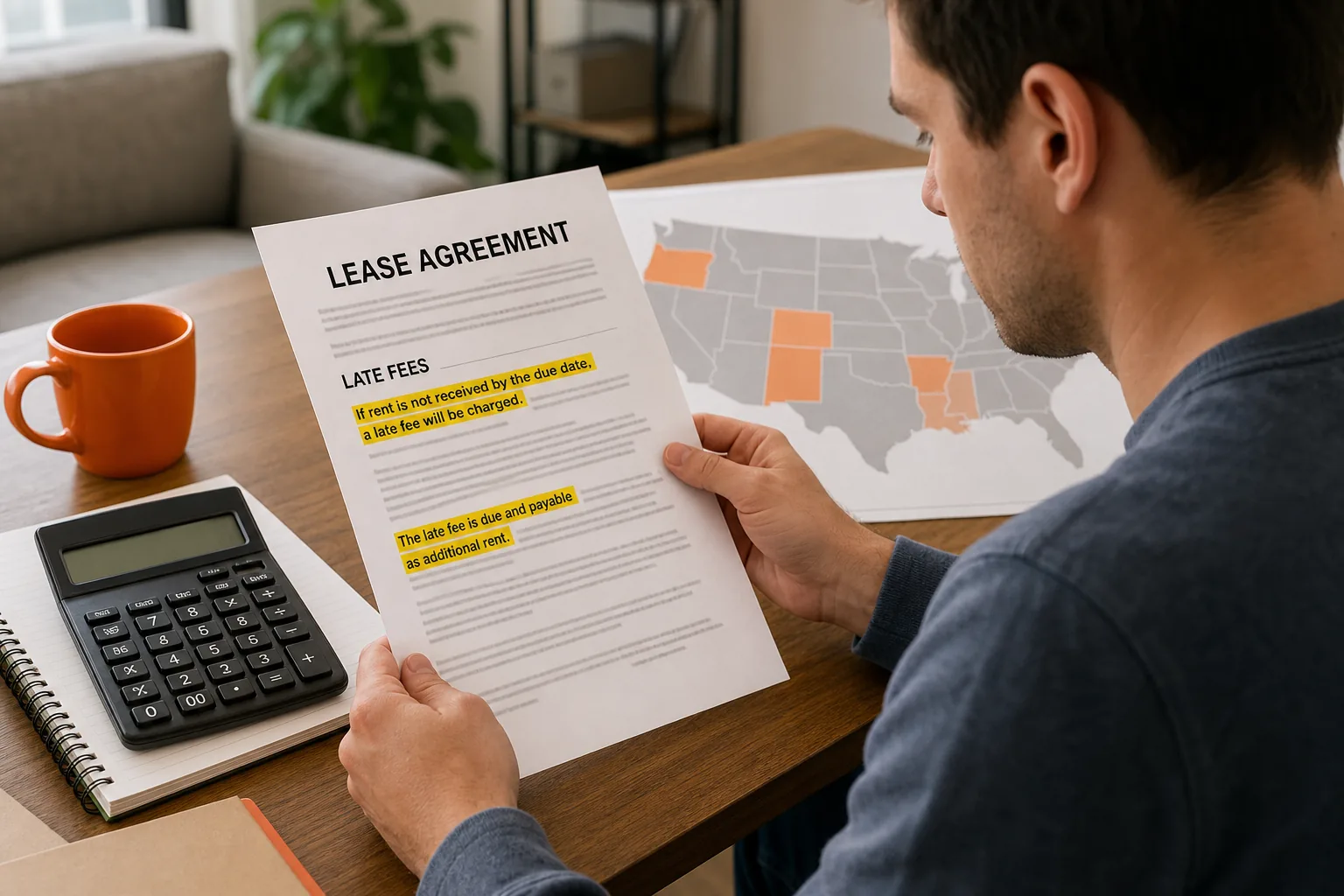
Most leases include a clause that tells you exactly when the late‑fee clock begins. Typically, the due date is the first of the month, and the landlord must give you a grace period before the fee applies. Grace periods vary by state and lease.
Here’s a quick snapshot of how it works in practice: if your rent is due on the 1st, a five‑day grace period means you have until the 6th to pay without penalty. Pay on the 7th and the late‑fee clause triggers.
Some landlords write the fee as a flat amount, while others tie it to a percentage. The lease should spell out both the amount and the date it starts. If the lease is vague, for example, saying “a reasonable fee after the grace period” without defining what’s reasonable, you have a stronger case to challenge it.
Watch the short video above for a visual walk‑through of a typical lease clause and how to spot red flags.
Even when the lease looks clear, applicable state rules still apply. A late fee should be reasonable and follow both the lease and local law. That means a landlord generally should not impose an excessive fee for a short delay.
LeaseGuard AI provides informational analysis only; it is not a law firm.
State-by-State Differences in Late Fee Limits
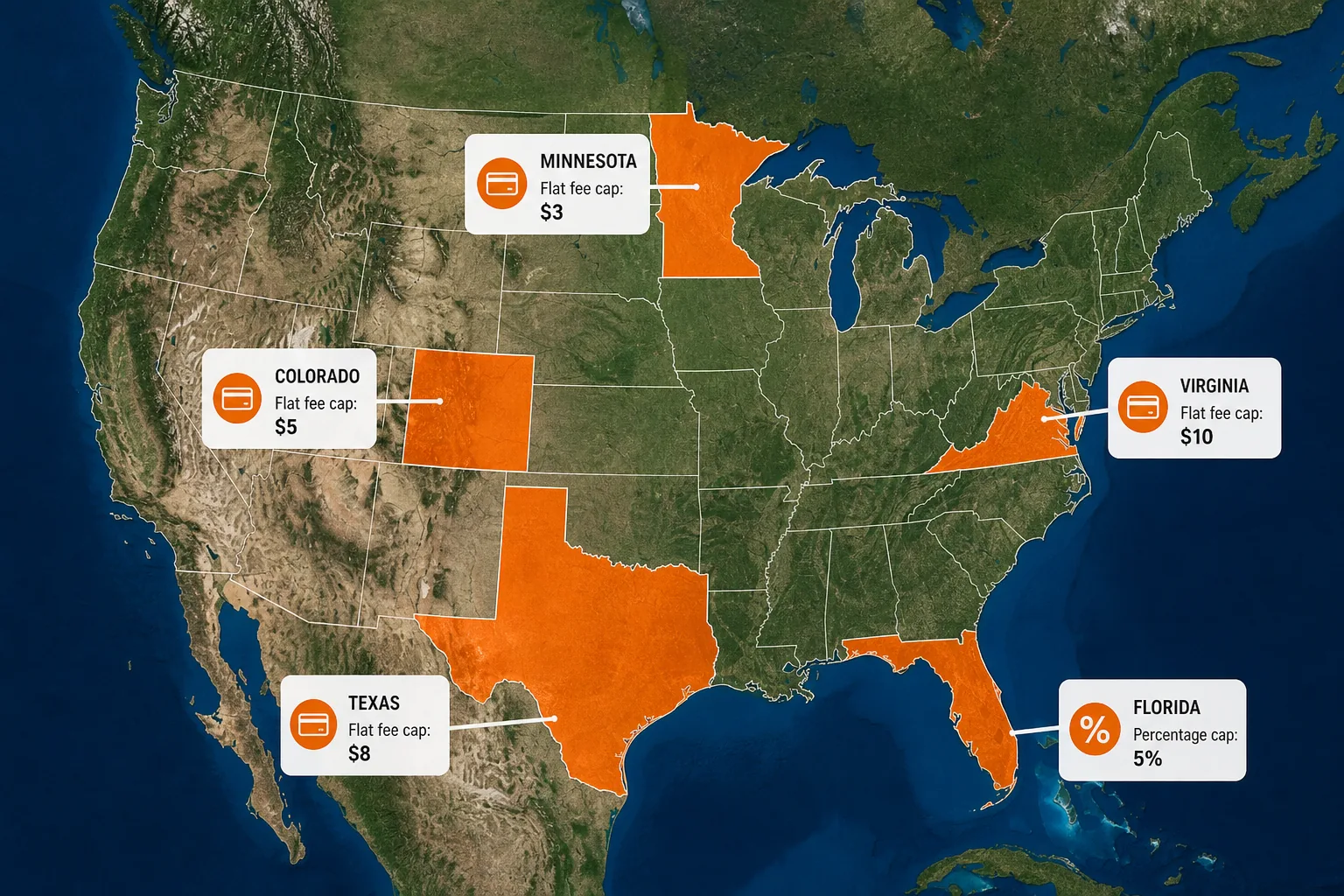
The United States doesn’t have a federal cap on late fees, so each state writes its own rules. Below is a concise map of the five states we examined, showing the maximum fee, the type of cap, and the grace period.
| State | Max Fee | Cap Type | Grace Period |
|---|---|---|---|
| Virginia | 10 % of rent or balance | Percentage | 5 days |
| Minnesota | 8 % of rent | Percentage | — |
| Colorado | $50 or 5 % of rent (whichever is greater) | Flat‑or‑percentage | 6 days |
| Florida | $20 or 20 % of rent (whichever is greater) | Flat‑or‑percentage | — |
| Texas | Reasonable (no set cap) | Reasonableness test | 2 days |
Florida’s law requires the fee to be written into the lease and deemed “reasonable,” but it also sets a floor of $20 or 20 % of rent F.S. 83.808. That means the late fee could be substantially higher than the 8 % cap in Minnesota.
Texas stands alone with no numeric cap; the “reasonable” standard leaves room for wide interpretation. Renters should ask the landlord to define the exact amount before signing.
When a Late Fee May Be Excessive or Unenforceable
Even a fee that follows the state’s numeric cap can be tossed out if a court finds it “unreasonable.” A late fee may be challenged when it does not reflect the landlord’s actual loss More information. Courts may compare the fee with the landlord’s documented loss and determine whether it functions as a penalty.
A charge that is far above the landlord’s actual loss could be deemed a penalty rather than a true damage recovery.
Another red flag is a fee that isn’t written into the lease at all. Even if the landlord claims a verbal agreement, most states require fees to be in writing to be enforceable. If you never saw the fee in your contract, you can challenge it as an undisclosed charge.
Finally, some fees violate federal rules when the rental unit receives housing subsidies. In Minnesota, for example, subsidized housing rules can override the state’s 8 % cap, meaning any additional fee could be illegal.
How Renters Can Check and Challenge a Late Fee
Step one is to grab a copy of your lease and locate the late‑fee clause. Verify three things: the fee amount, the grace period, and whether the clause matches the state’s statutory language.
If the fee looks higher than the applicable state limit, write a polite letter to the landlord and ask for the fee to be reduced or waived.
Should the landlord refuse, you can file a complaint with your local housing authority or small‑claims court. Bring your lease, the landlord’s invoice, and any proof of payment dates. Many states require the landlord to provide an itemized statement of the actual loss, which can expose an inflated charge.
For a faster, tech‑savvy route, run your lease through LeaseGuard AI. The service scans the document, flags any fee that exceeds the legal limit, and gives you a plain‑language summary you can attach to your dispute letter.
FAQ: Landlord Late Fees
Can a landlord charge a flat fee instead of a percentage?
Yes, if the flat amount does not exceed the state’s maximum. Colorado allows $50 or 5 % of rent, whichever is greater, and Florida permits $20 or 20 % of rent, whichever is greater.
Do all states require a grace period?
No. Texas mandates a two‑day grace period, Virginia five days, and Colorado six days. The extracted data lists no grace period for Minnesota or Florida, so you should verify the lease language.
What if my lease doesn’t mention a late fee at all?
If the lease is silent, the landlord generally cannot add a fee after you’ve signed. Most states require any fee to be written into the agreement to be enforceable.
Are late fees considered “penalties”?
Only if the amount far exceeds the landlord’s actual loss. Courts in California and other states have struck down fees that look like penalties rather than a genuine estimate of damage.
Can I negotiate the late‑fee amount before I sign?
Absolutely. Ask the landlord to lower the fee or increase the grace period. If the landlord agrees, get the change in writing as an amendment to the lease.
Conclusion
If you know the statutory caps, the lease’s grace period, and how to spot an unreasonable charge, you can keep late fees from blowing up your budget. Run your lease through LeaseGuard AI today, spot any risky clauses, and use the report to negotiate or dispute any fee that looks out of line.
This article is general information, not legal advice. Laws vary by state — verify details with your state's landlord-tenant statutes or a licensed attorney.
Check Your Own Lease Now
Everything in this guide applies to leases in general — but your lease may have specific clauses that need their own review. Upload it free.
Analyze My Lease — Free