Late fees can bite hard when you’re already juggling bills. Knowing the rules lets you spot an illegal charge before it hurts your credit. Below you’ll find what a late fee is, how states calculate it, which lease clauses make it pricey, and what to do if you’re hit with an unfair charge.
What Is a Late Fee on Rent, and When Can It Apply?
A late fee on rent is a charge a landlord adds when you miss the agreed‑upon payment date. The fee is meant to cover the landlord’s extra work, but the law says it can’t be a penalty that far exceeds the actual cost. Most leases spell out a grace period, often five days, before the fee kicks in. If you pay within that window, you avoid the extra cost.
Some state housing guidance notes that a lease can require rent on any day of the month, and missing that deadline may trigger a late fee, a possible credit‑report hit, or even eviction More information. The same principle applies across the country, though the exact limits vary by state.
And if you wonder whether a fee is legal, look for two things in your lease: a written late‑fee clause and a fee amount that stays within your state’s cap. Anything else is likely unenforceable.
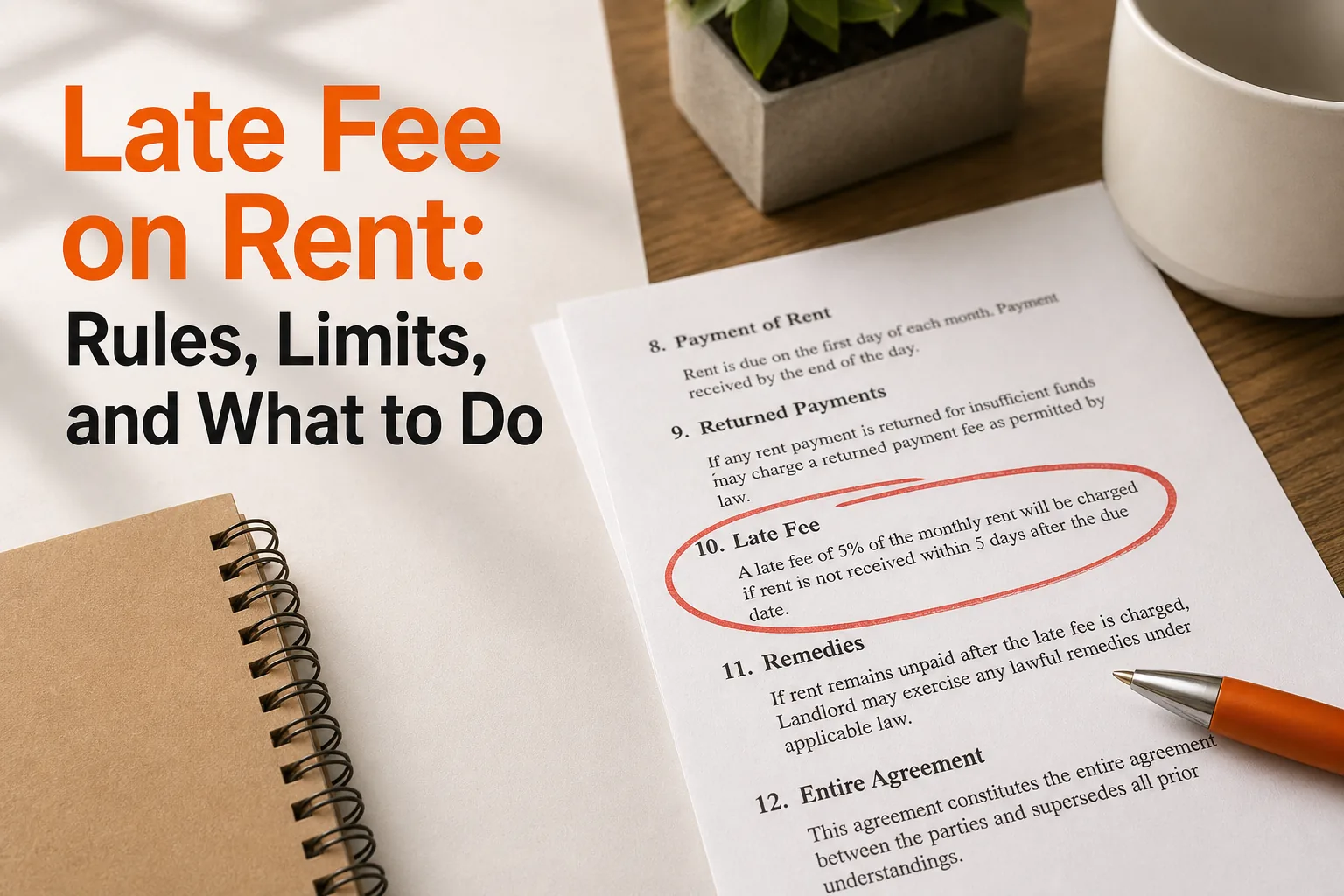
How Late‑Rent Charges Are Calculated Across States
States use two main formulas: a flat dollar amount, a percentage of the monthly rent, or a blend of both. Washington says a late fee can be “twenty dollars or twenty percent of the monthly rental amount, whichever is greater”. Virginia caps the fee at the lesser of 10% of the rent or 10% of the remaining balance. Colorado limits the fee to the greater of $50 or 5% of past‑due rent. North Carolina follows a similar “both” rule, with a $15 floor and a 5% cap.
| State | Grace Period (days) | Dollar Cap | Percentage Cap | Calculation Method |
|---|---|---|---|---|
| Washington | — | — | 20 % | Greater of $20 or 20 % of monthly rent |
| Virginia | 5 | — | 10 % | Lesser of 10 % of rent or 10 % of balance |
| Colorado | 7 | $50 | 5 % | Greater of $50 or 5 % of past‑due rent |
| North Carolina | 5 | $15 | 5 % | Greater of $15 or 5 % of rent |
Notice how the caps swing from $15 in North Carolina to $50 in Colorado. That range means a fee that looks modest in one state can be illegal in another. When you review a lease, compare the fee clause to the numbers above.
Which Lease Clauses Can Make a Late Fee More Expensive?
Even if a state caps the fee, a lease can still pile on extra costs. Look for clauses that add “administrative fees,” “processing fees,” or “penalty surcharges” on top of the statutory late fee. Some landlords write a clause that charges a flat $25 plus 5 % of the overdue rent, effectively bypassing the cap. Others require a “late‑fee escalation” that doubles the charge after a second missed payment.
Another red flag is a clause that ties the fee to a percentage of the remaining balance rather than the monthly rent. A fee may be limited to the lesser of 10 % of rent or 10 % of the balance, so a clause that says “10 % of the total amount you owe” could exceed the legal limit if the balance includes future rent.
How to Check Whether Your Late Fee Looks Enforceable
The fastest way to verify a fee is to match the lease language against your state’s statutory caps. Write down the fee amount, the grace period, and any additional charges. Then pull the numbers from the table above. If the lease fee exceeds the cap, it’s likely unenforceable.
LeaseGuard AI can do this instantly. Upload your lease, and the AI scans for risky late‑fee clauses, flags amounts that break state limits, and even suggests language you can ask the landlord to revise. Florida Late Fee Rules: What Your Landlord Can and Cannot Charge is a good example of a page that explains the exact caps you’ll .
What to Do If You Were Charged an Unfair Late Fee
First, gather proof: the lease clause, your payment records, and the state law you think was violated. A copy of your rent ledger (or bank statements) shows the exact date you paid. Then write a polite, factual letter to the landlord citing the specific statute and asking for a refund.

If the landlord refuses, you can file a complaint with your local housing authority or small‑claims court. Many states require landlords to return any unlawful fee within a set period, often 30 days. And if the fee caused a credit‑report hit, you can dispute that entry with the credit bureaus, attaching the same legal references.
For Florida renters, information about tenant rights is available here: Tenant Rights in Florida, 2026 Renter's Guide. Even if you live elsewhere, the process is similar.
Frequently Asked Questions About a Late Fee on Rent
Can a landlord charge a late fee if the lease doesn’t mention one?
No. A landlord must include a written late‑fee clause in the lease for the charge to be enforceable. Without that language, the fee is not valid.
What is a reasonable grace period?
Most states set a grace period of five days. Colorado allows seven days. Anything shorter than the statutory minimum may be considered unreasonable.
Do all states cap late fees at a dollar amount?
No. Some states, like Virginia, use only a percentage cap. Others, like Colorado and North Carolina, use a combination of a dollar floor and a percentage ceiling.
Can a landlord increase the late fee after I’ve signed the lease?
Generally, no. Changing the fee requires an amendment to the lease, which must be signed by both parties. Unilateral changes are not enforceable.
How can I prove I paid on time?
Save canceled checks, bank statements, or electronic receipts that show the payment date. A postmarked certified‑mail receipt also counts as proof.
Conclusion
If a late fee feels too high, check your state’s cap, compare it to the lease clause, and use LeaseGuard AI to verify compliance. Upload your lease today and get a quick risk report so you can negotiate or dispute any illegal charge.
This article is general information, not legal advice. Laws vary by state — verify details with your state's landlord-tenant statutes or a licensed attorney.
Check Your Own Lease Now
Everything in this guide applies to leases in general — but your lease may have specific clauses that need their own review. Upload it free.
Analyze My Lease — Free