You're about to sign a lease. Before you do, you might see an extra page called a lease addendum. It can add fees, rules, or new rights that weren’t in the original contract. Below we break down exactly what it is, how it works, the common types you’ll meet, the clauses that need a second look, and when an addendum can be tossed out.
What Is a Lease Addendum, and How Does It Work?
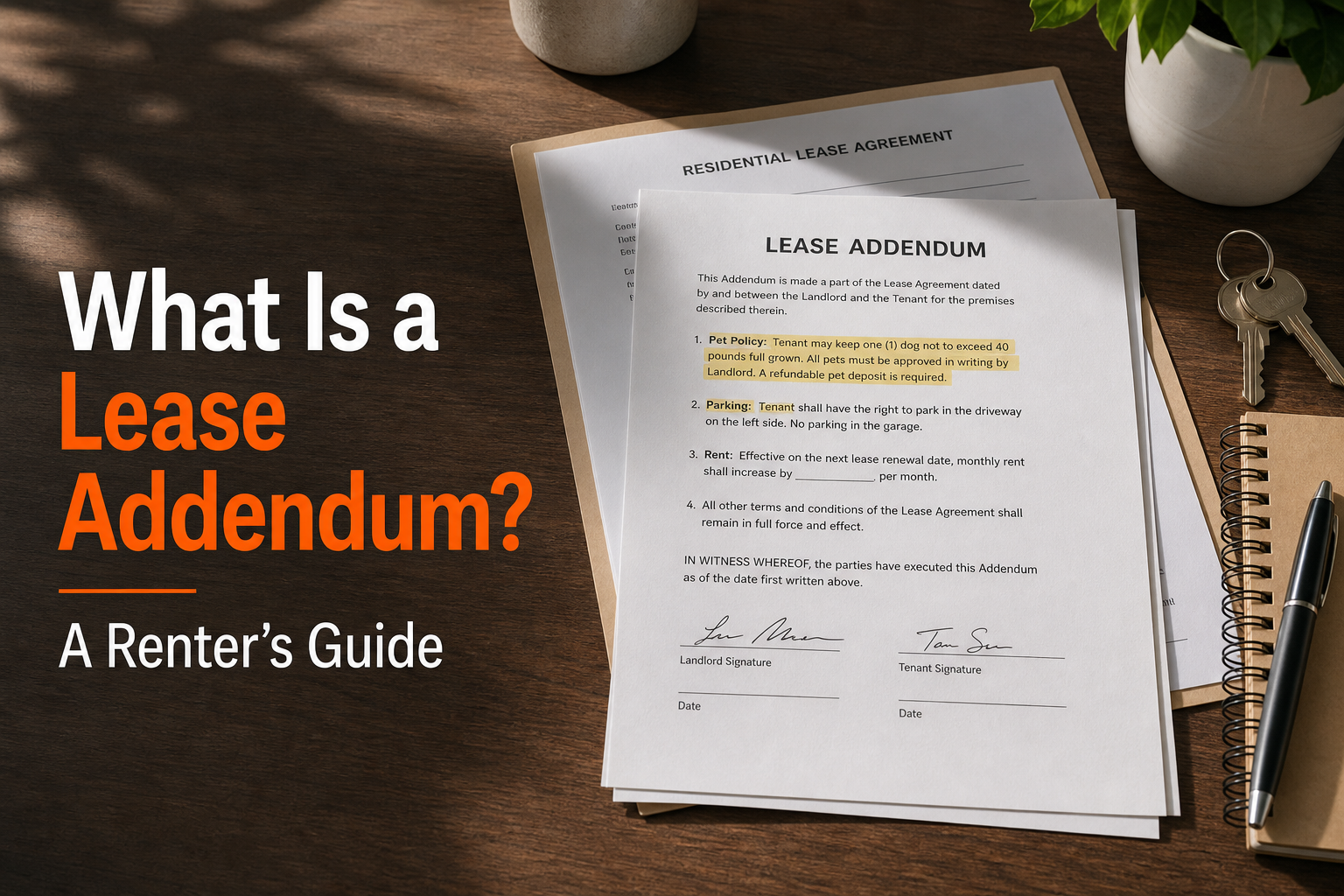
A lease addendum is a separate document that tacks onto the main lease to add or change terms without rewriting the whole agreement. Both landlord and tenant must sign it, and once signed it carries the same legal weight as the lease itself. Wikipedia explains that an addendum can cover anything the original lease missed, from pet rules to parking fees.
The addendum must reference the original lease by date and address, and it should be attached as an exhibit. When you get the addendum, treat it like any other contract: read it line‑by‑line, ask who benefits, and check if the language matches what you agreed to verbally.
Because it’s a supplement, the original lease still controls anything the addendum doesn’t mention. Think of it as a software patch: the core stays the same, but the patch fixes a specific issue.
LeaseGuard AI can spot hidden fees in an addendum in seconds, saving you from costly surprises later.
Common Types of Lease Addenda Renters May See
Most landlords use a handful of standard addenda. Below is a quick reference that shows the purpose of each and the typical clauses you’ll find.
| Addendum | Purpose | Typical Clauses |
|---|---|---|
| Pet Addendum | Allows specific animals and sets fees | Pet type, weight limit, refundable or non‑refundable deposit, damage responsibility |
| Parking Addendum | Assigns a parking spot or garage space | Spot number, monthly fee, rules about vehicle type, notice for fee changes |
| Roommate Addendum | Adds a new co‑tenant or authorized occupant | Co‑tenant vs. occupant status, liability split, deposit adjustments |
| Rent Reduction Addendum | Documents a temporary or permanent rent cut | Effective dates, duration, whether the reduction is permanent |
| Lease Buyout Addendum | Sets a pre‑agreed early‑termination fee | Notice period (30–60 days), buyout amount (1–2 months rent) |
| Smoking & Cannabis Addendum | Prohibits or restricts smoking inside the unit | Areas covered, penalties for violations, any designated smoking zones |
| Lead‑Based Paint Disclosure | Required for homes built before 1978 | Disclosure of known hazards, acknowledgement of federal law |
| Mold Addendum | Discloses mold history and responsibility for remediation | Whether tenant must report mold, who pays for cleanup |
| Bed Bug Addendum | Requires reporting of past infestations | History disclosure, tenant’s duty to treat, landlord’s remediation timeline |
| Renovation Addendum | Sets rules for modifications to the unit | List of permitted alterations, restoration requirements at move‑out |
Knowing which addenda are common helps you spot the ones that matter for your situation. For example, if you have a dog, the pet addendum is where you’ll see the pet rent and deposit details.
Want a deeper dive on how to read each clause? Check out How to Read a Lease Agreement for a step‑by‑step walkthrough.
Which Lease Addendum Clauses Deserve a Careful Review?
Not every clause is risky, but a few red flags show up again and again. Here’s what tenants should watch for.
- One‑way attorney‑fee clauses, they make you pay the landlord’s legal costs.
- Confession of judgment, lets the landlord get a judgment without a hearing.
- Exculpatory language that waives the landlord’s duty to keep the unit livable.
- Automatic renewal with a long notice window, you could be locked in.
- Joint‑and‑several liability, each signer is on the hook for the full rent.
These clauses shift risk onto the tenant in ways many states consider illegal or unreasonable. If you spot any, ask for a rewrite before you sign.
Even a well‑written addendum can hide costly language. LeaseGuard AI highlights these trouble spots and even estimates the financial impact.
When Is a Lease Addendum Enforceable or Invalid?
For an addendum to be enforceable, both parties must sign it and it must not violate tenant‑protection laws. The document cannot override core rights like the warranty of habitability or anti‑discrimination rules.
Electronic signatures may be valid when all signers consent.
If a landlord adds a clause that tries to waive habitability, courts will strike it down. Similarly, any provision that conflicts with local housing codes is likely void.
Missing signatures, vague references to the original lease, or language that tries to force you into illegal fees can make the addendum invalid. Keep a fully executed copy with the original lease for future reference.
LeaseGuard AI provides informational analysis only; it is not a law firm.

How LeaseGuard AI Helps You Review an Addendum Before Signing
LeaseGuard AI scans your lease and any attached addenda in seconds. It flags risky clauses, estimates what‑if costs, and translates legal jargon into plain language.
The tool pulls from a database of landlord‑tenant statutes, so it knows when a clause violates state law. For example, if a pet addendum tries to charge a non‑refundable pet fee in a state that caps deposits, the AI will highlight that conflict.
After the scan, you get a report with a risk score, a list of flagged items, and suggested negotiation language. The process is secure: files are deleted after analysis, and no personal data is stored.
Because the AI cross‑references every clause with the specific statute, you avoid the common blind spot where 80% of guides miss state‑specific rules.
Learn more about the Florida Lease Review AI tool if you rent in the Sunshine State.
FAQ: Lease Addenda
Do lease addenda have to be signed in person?
No. Electronic signatures can be legally binding when both parties consent, making it easy to sign an addendum online.
Can I rely on LeaseGuard AI instead of a lawyer?
LeaseGuard AI provides informational analysis only; it is not a law firm. It’s a great first step, but you should still consult an attorney for complex disputes.
What if the AI misses a clause?
The tool covers over 90% of common risk areas, but no AI is perfect. If you think something was overlooked, you can upload the document again or seek professional counsel.
Conclusion
If you need to understand what an addendum can change, start by reading every page carefully and run the document through LeaseGuard AI for a quick risk check. Upload your lease today and get a clear, plain‑English report that shows you exactly where to negotiate.
This article is general information, not legal advice. Laws vary by state — verify details with your state's landlord-tenant statutes or a licensed attorney.
Check Your Own Lease Now
Everything in this guide applies to leases in general — but your lease may have specific clauses that need their own review. Upload it free.
Analyze My Lease — Free