Rent hikes feel sudden, but the law actually sets limits. Below you’ll see what caps exist, how they’re calculated, and what to watch for before you sign a new lease.
What Determines How Much Your Rent Can Increase?
Every state writes its own rules about rent hikes. Some places, like California, impose a statutory ceiling of up to 10 % per year, while others only require a notice period. Local rent‑control ordinances can add stricter caps, and many jurisdictions exempt newer buildings or Section 8 units. The lease itself may also contain an escalation clause that predates any increase. All of these pieces decide the ceiling you’ll see on your next rent bill.
For example, Washington’s baseline is 90 days’ written notice for any increase, but cities such as Tacoma now demand 180 days regardless of the amount; notice details are available. In California, annual increases are capped at 10 % under applicable rules (see applicable guidance). Understanding which rule applies to your unit is the first step in judging whether a landlord’s number is legal.
Definition of a Rent Increase
A rent increase is a formal written notice that the monthly payment will rise on a specified future date. The notice must include the new amount, the effective date, and, in most states, the method of delivery. It is separate from any new fees or utilities the landlord might add later.
How It Works
Landlords calculate the jump in two ways: the dollar amount and the percentage change. Percentage is found by dividing the difference by the current rent and multiplying by 100. The percentage depends on the size of the rise relative to the current lease.
Many renters use a calculator to see how the increase stacks up against inflation. In 2026 the U.S. CPI hovers around 2.5‑3 %, so a 3 % hike usually tracks cost‑of‑living, while anything above 5 % often needs justification. The math is simple, but the law adds layers: caps, notice periods, and exemptions all filter the final number.
When the increase passes a legal cap, tenants can challenge it in housing court. The challenge works best when you have the exact figures and a copy of the landlord’s notice.
Where Rent Increases Are Used
Rent hikes appear most often at the end of a month‑to‑month tenancy or when a lease renewal rolls over. Fixed‑term leases usually freeze the rent until the contract ends, unless the lease includes an escalation clause that spells out how and when the rent can rise.
In New York City, rent rules can set a 0% maximum increase, with exceptions for decontrolled units. In places without formal rent control, applicable caps and notice requirements may still matter. For example, Seattle has no rent control and requires 180 days’ notice, while California's statewide maximum increase is 10% and some cities list a 5% maximum.
Examples of Rent Increase Limits and Notice Rules
Below is a snapshot of how different jurisdictions treat rent hikes. The numbers reflect the legal maximum, not what every landlord actually charges.
| Location | Max % Increase | Notice Required | Rent‑Control Status |
|---|---|---|---|
| California (statewide) | 10 % | 30 days (≤10 %) or 90 days (>10 %) | Yes (Tenant Protection Act) |
| Los Angeles | 5 % | 30 days | Yes |
| San Francisco | 5 % | 30 days | Yes |
| New York City (controlled units) | 0 % | 60 days | Yes |
| Washington (statewide) | 10 % | 90 days | No |
| Seattle | — | 180 days | No |
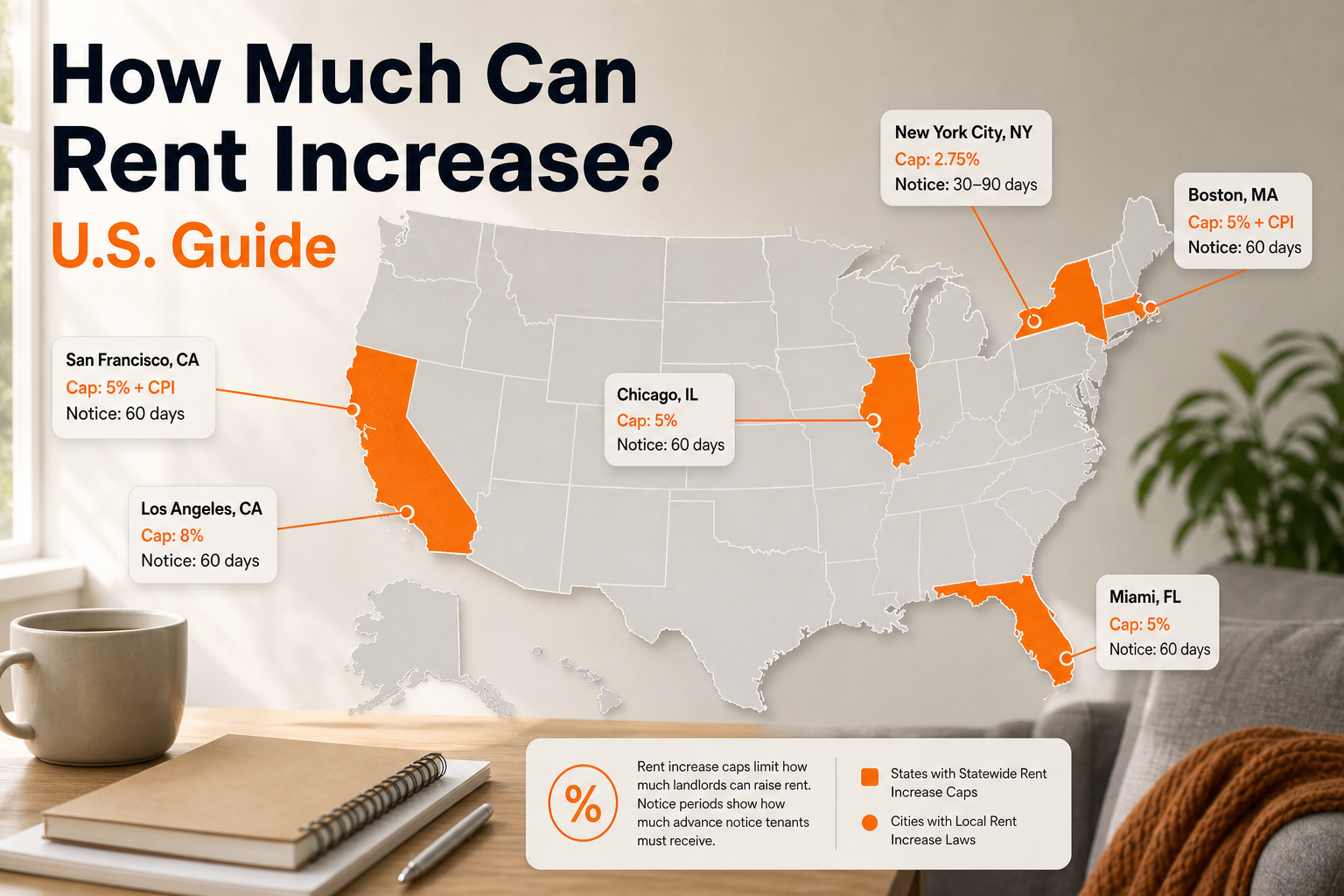
Notice periods matter because they dictate when a tenant can legally object. If a landlord skips the required 90‑day window in Washington, the increase is void and the tenant can refuse to pay the higher amount.
When a Rent Increase May Be Improper or Unenforceable
Not every hike is illegal, but several red flags signal a problem. Retaliatory increases, those made after a tenant files a complaint or requests repairs, are prohibited in many states. California presumes retaliation if the rent rises within 180 days of a protected activity, while Washington uses a 90‑day window (see the anti‑retaliation overview).
Another common issue is exceeding the statutory cap. In rent‑stabilized New York, a landlord cannot go above the board‑approved percentage, even if the market would bear more. Likewise, a landlord who fails to give proper notice can have the increase declared unenforceable.
Finally, some lease clauses are simply illegal. For instance, a clause that allows the landlord to raise rent during the first year of tenancy is void in most states because the law bars increases until the lease term ends.
How to Review a Rent Increase Before You Sign the Renewal
First, pull the landlord’s notice and compare the new amount to your current rent. Use a simple calculator: new rent minus old rent, divided by old rent, times 100. If the percentage exceeds your state’s cap, you have a solid argument.
Second, check the lease for any escalation clause that predates the notice. If the clause was signed at the start and matches the increase, the landlord may be in the clear. If not, flag it.
Third, research comparable units in your building or neighborhood. Websites like Zillow or Apartments.com let you see market rates. If the proposed hike is far above the local norm, bring that data to the conversation.
Fourth, run the document through an AI lease reviewer. LeaseGuard AI scans every clause, flags illegal caps, and highlights missing notice periods. It gives you plain‑language explanations you can point to in an email.
Finally, draft a polite response that cites the law, your research, and any discrepancies. Offer a compromise, perhaps a smaller increase spread over two years, in exchange for signing a longer lease. For practical scripts and tactics, review how to negotiate your lease before signing.

Frequently Asked Questions
How much can rent increase in a month‑to‑month lease?
It depends on state law. Many states require only a 30‑day notice and let the landlord raise rent by any amount, but caps exist in places like California (10 %) and Washington (10 %). Check your local statutes for exact limits.
What notice period does my landlord need to give?
Notice periods vary: 30 days is common for small hikes, 60 days for larger increases, and some cities, Seattle and Tacoma, require 180 days regardless of size. The required period is usually spelled out in state statutes or local rent‑control ordinances.
Can a landlord raise rent during the first year of my lease?
Generally no. Most states prohibit any increase until the lease term ends unless the lease already includes a written escalation clause that was signed before moving in.
Conclusion
If a rent increase feels steep, check your state’s cap, verify the notice period, and compare the new amount to market rates. When in doubt, run the lease through LeaseGuard AI for a fast, free risk report. Armed with that info, you can negotiate a fair increase or push back on an illegal hike.
This article is general information, not legal advice. Laws vary by state — verify details with your state's landlord-tenant statutes or a licensed attorney.
Check Your Own Lease Now
Everything in this guide applies to leases in general — but your lease may have specific clauses that need their own review. Upload it free.
Analyze My Lease — Free