Got a lease you need to walk away from? You don’t have to fight a courtroom. Follow these steps and you’ll exit cleanly, keep your deposit, and stay on good terms with your landlord.
Step 1: Review Your Lease Terms & Spot Break Clauses
First, pull out the lease and scan the early‑termination clause. Look for language that lets you exit early, such as a “break fee” or a “notice period.” If the lease is silent, the default rule in most states is a 30‑day written notice after the next rent is due (U.S. Code §3955). Mark any fees that seem unusually high, they may be negotiable.
We like to run the document through LeaseGuard AI’s clause‑checker. The tool flags risky terms, explains them in plain language, and even drafts a polite email you can send to your landlord.
By the end of this step you should have a list of:
- Notice requirements
- Any early‑termination penalties
- Special clauses that might let you quit without fee
Step 2: Identify Legal Grounds for Early Termination
Some situations let you break a lease without paying a penalty at all. Common legal grounds include:
- Active military deployment or relocation orders
- Serious health or disability that makes the unit unlivable
- Domestic violence or credible threat to safety
- Landlord’s breach of habitability standards (no heat, leaking roof, pest infestation)
- Landlord’s illegal entry or violation of quiet‑enjoyment rights
One often‑overlooked ground is the “Reject Modified Rental Terms” rule. If a landlord changes the lease after you’ve signed, you can terminate by giving written notice at least 30 days before the change takes effect (24 CFR §247.4). Keep any notices or emails that prove the change.
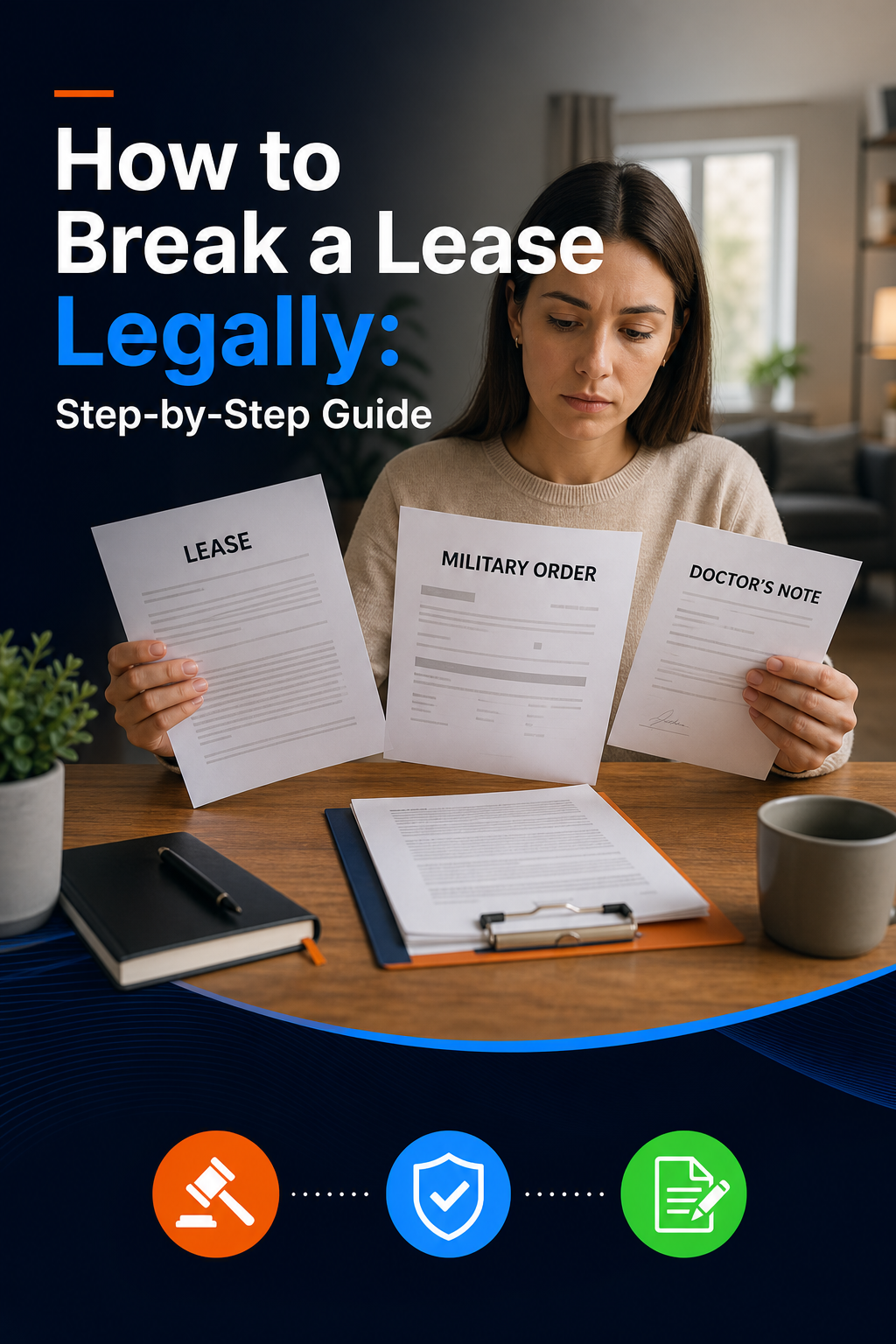
Document the legal ground you’re relying on with copies of orders, doctor’s notes, police reports, or photos of habitability issues. This paperwork will back up your notice and protect you if the landlord pushes back.
Step 3: Draft a Formal Lease‑Break Notice
Write a short, polite letter. Start with the date, address the landlord by name, and state your intent to vacate. Cite the specific clause or legal ground you’re using. Example:
[Date]
[Landlord Name]
[Landlord Address] Re: Notice of Early Lease Termination I am providing notice that I will vacate the premises at [address] on [move‑out date]. This notice is given under the [cite clause or legal ground, e.g., military relocation order, habitability violation, 24 CFR §247.4]. I have attached supporting documentation. Please confirm receipt and let me know the process for the final walk‑through and deposit return. Thank you,
[Your Name]
Send the notice via certified mail or email with a read receipt. Keep a copy for your records. If the landlord replies with a fee, you can negotiate or invoke your legal ground.
Step 4: Negotiate with Your Landlord
Most landlords prefer a new tenant over a lawsuit. Offer to help find a replacement, share the listing, or allow showings on your schedule. If you have a solid legal ground, let the landlord know you’re prepared to enforce it, but stay friendly.
Use the negotiation script from our guide on lease negotiation. It gives you a polite opening, a clear request, and a fallback offer (e.g., paying one month’s rent instead of the full penalty).
If the landlord agrees to a reduced fee, get the agreement in writing. A signed amendment protects both sides and makes the move‑out smoother.
Step 5: Follow State‑Specific Procedures & Get Your Deposit Back
Florida has a clear timeline for security deposits. After you move out, the landlord must return the full deposit within 15 days if there are no deductions, or send a written claim of deductions within 30 days (U.S. Code §3955). Provide a forwarding address in writing to start the clock.
Schedule a joint move‑out inspection. Request a written condition report that lists any damages. If the landlord tries to keep part of the deposit for normal wear and tear, dispute it with your photos and the inspection report.

In other states, notice periods vary but the 30‑day rule is common. Check local statutes or ask a tenant‑rights clinic for exact deadlines.
Once you receive the deposit (or a claim), review it carefully. If deductions seem unfair, send a certified demand letter within the statutory window. You can often resolve the dispute without going to court.
Florida City Checklist
These Florida markets have similar deposit rules, but local practices differ. Use this quick list when you’re moving from or out of each city.
- Miami: Expect landlords to request a joint inspection 7‑10 days before move‑out. Many use a third‑party cleaning service; get the quote in writing.
- Kissimmee: Some apartments add a “administrative fee” for processing the deposit return. Verify if it’s allowed under FS 83.49.
- St. Cloud: Small‑town landlords often return deposits by cash; ask for a receipt.
- Orlando: High‑turnover rentals may waive the 15‑day return and send a check later. Insist on written confirmation of the timeline.
- Tampa: Look for a clause that lets the landlord deduct “cleaning fees” without an itemized list, it may be illegal.
- Jacksonville: Many properties require you to leave the unit “sparkle clean.” Document your cleaning with photos.
- Tallahassee: University‑town rentals often have a separate “move‑in inspection” form; keep both forms for evidence.
For a deeper dive on Florida deposit law, see our Florida Security Deposit Return Guide.
FAQ
Can I break a lease without paying any fee?
Yes, if you qualify under a legal ground such as active military orders, a serious health issue, domestic violence, or a proven habitability violation, you can terminate without penalty.
How much notice do I need to give?
Most states require a 30‑day written notice, but month‑to‑month leases may need only 30 days after the next rent due date; non‑monthly leases end on the last day of the following month.
What if my landlord refuses to return my deposit?
You should send a certified demand letter that cites the statutory deadline (15 days for a full return in Florida) and request the full amount plus any allowed fees.
Do I need a lawyer to break a lease?
You don’t need a lawyer for most cases, but a brief consult with a tenant‑rights attorney can clarify complex situations, especially if the landlord disputes your legal ground.
Can I have someone take over my lease?
Yes, many leases allow a lease assignment or a qualified replacement tenant. Get the landlord’s written approval and make sure the new tenant meets the original screening criteria.
How does LeaseGuard AI help?
LeaseGuard AI scans your lease for risky clauses, flags legal grounds for early exit, and generates a ready‑to‑send notice, saving you hours of legal research.
Ready to move on? Drag and drop your lease into LeaseGuard AI, get a plain‑language report, and start the break‑lease process with confidence.
This article is general information, not legal advice. Laws vary by state — verify details with your state's landlord-tenant statutes or a licensed attorney.
Check Your Own Lease Now
Everything in this guide applies to leases in general — but your lease may have specific clauses that need their own review. Upload it free.
Analyze My Lease — Free