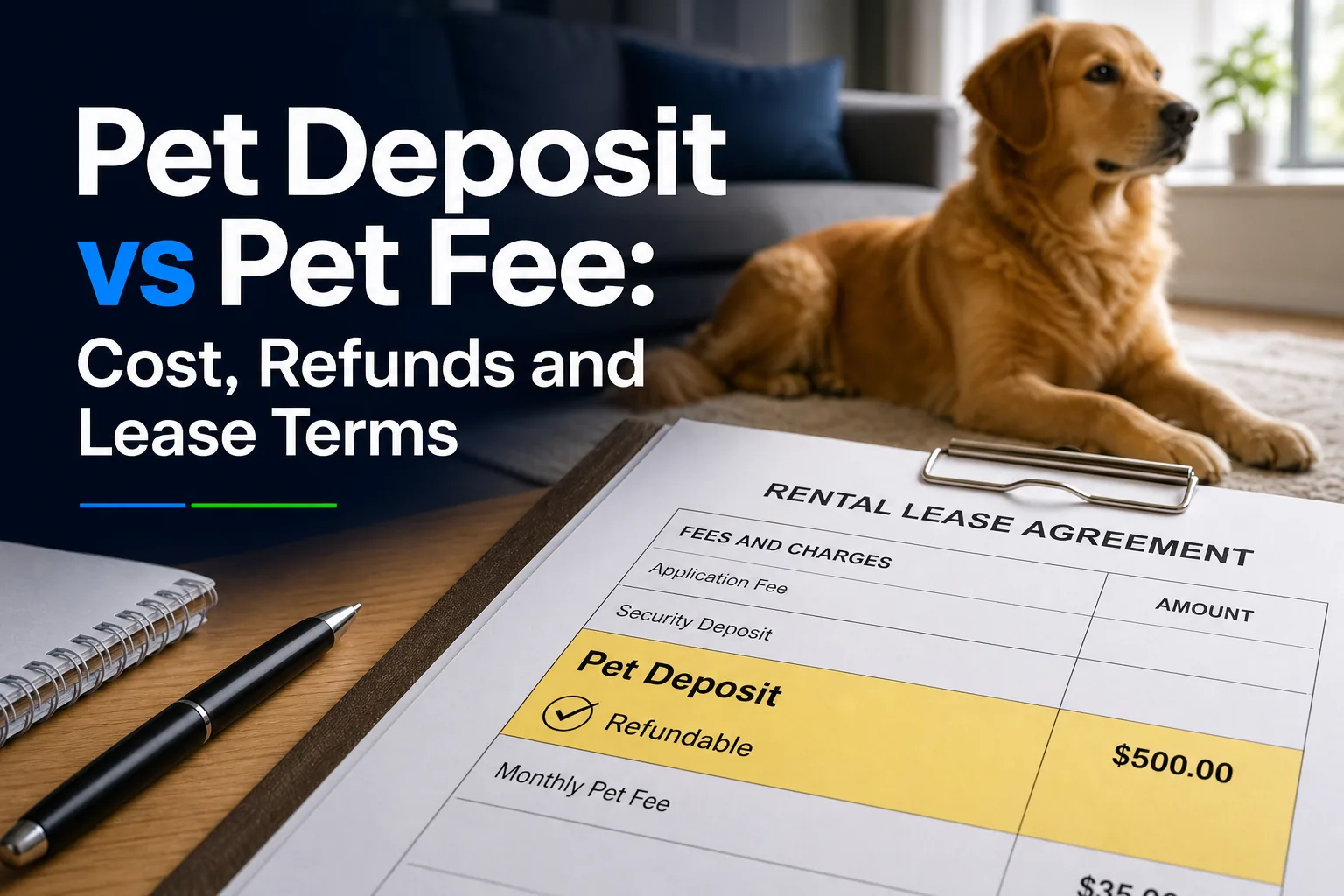
Pet deposit vs pet fee comes down to one question: do you get the money back? A deposit is refundable after any damage deductions, while a fee is gone once you pay it. Below you’ll see the key differences, how each works in practice, and which one usually makes more sense.
We analyzed 49 comments from Reddit and YouTube about pet deposits and found that 31% mentioned the abuse of ESA letters.
Pet Deposit vs. Pet Fee at a Glance
Both pet deposits and pet fees appear on move‑in paperwork, yet they behave very differently. The table shows the main criteria side by side.
| Aspect | Pet Deposit | Pet Fee |
|---|---|---|
| Typical amount (2026) | Varies by landlord (refundable) | Varies by landlord (non‑refundable) |
| Payment timing | Upfront, returned at move‑out if no damage | One‑time, kept by landlord |
| Refundability | Usually refundable after deductions | Never refundable |
| Legal caps | Subject to state security‑deposit limits (e.g., CA AB 12 caps total at one month’s rent) | Often used where caps prevent higher deposits; some states ban non‑refundable pet fees |
| Typical use | Cover pet‑caused damage beyond normal wear | Cover administrative costs or extra cleaning |
Notice how the deposit can come back if the pet leaves the place spotless, while the fee is a sunk cost.
For a deeper dive on how pet‑related charges fit into your overall rent, check out our guide on Pet Rent: How to Set and Challenge Rental Fees. It walks through monthly pet rent, fees, and deposits side by side.
Upfront Cost, Refunds, and Damage Deductions
When you sign a lease, the first cash outlay often includes either a deposit or a fee. The numbers matter because they affect your move‑in budget and your pocket at move‑out.
Pet Deposit
Landlords can deduct actual pet damage, and most states require an itemized list of deductions, with some also requiring receipts. A pet deposit is a one-time refundable payment if your pet doesn't cause damage.
Refund timing varies by location, so check your lease and local rules.
Pet Fee
A pet fee is a one-time payment that is not refundable. It cannot be returned, even if the pet causes no damage. The fee often covers cleaning, wear‑and‑tear, or administrative costs.
Because it’s non‑refundable, the tenant has no right to demand an itemized statement. Check your state before agreeing to a nonrefundable fee that may be illegal.
Below is a short video that walks through how landlords typically calculate damage deductions from a pet deposit.
When you compare the two, the deposit’s refundable nature adds a safety net, while the fee is a fixed cost that can push your move‑in budget higher.
Not sure which kind of charge your lease uses? LeaseGuard AI reviews the lease and points out each pet charge in plain language.
Lease Language and State-Level Rules to Check
Every lease spells out pet charges differently, and state law can change what’s allowed. Reading the fine print is essential.
Key language to watch
Look for exact terms: “pet deposit,” “pet fee,” or “pet rent.” If a lease calls a charge a “deposit” but says it is non‑refundable, ask the landlord to clarify whether the charge is refundable.
Also check the addendum. A pet addendum might list a fee and a rent charge together, so review whether each charge is one-time or monthly.
Rules for pet charges can vary by location, so check local requirements before agreeing to a charge.
When a lease uses vague language like “additional charge,” ask the landlord for a breakdown. Knowing whether the amount is refundable changes how you budget for the entire tenancy.

LeaseGuard AI is an AI-powered lease-review service that can flag vague pet-charge wording for your review.
When a Pet Deposit or Pet Fee Is the Better Fit
Choosing the right charge depends on how long you plan to stay, your pet’s habits, and the local legal landscape.
Short‑term stays (under a year)
If you’re renting for less than a year, a fee may feel simpler, but compare the amounts first. A refundable deposit usually costs you less in the end if you leave the unit in good shape, even though the cash is tied up until move-out.
Long‑term stays (multiple years)
For a multi‑year lease, the refundable deposit can save you money if your pet is well‑behaved. Even after deducting minor damage, you’ll likely get most of the deposit back, whereas a fee never returns.
States with strict caps
In California, a pet deposit counts toward the total security‑deposit cap, and non‑refundable deposits or fees are not allowed. In states that cap deposits but allow fees, a landlord may offer a fee instead of a larger deposit.
Risk‑averse renters
If you want a safety net and are confident you can keep the unit clean, push for a refundable deposit and negotiate any fee down. Document the unit’s condition with photos before moving in. That gives you evidence if the landlord tries to keep money.
Pet Deposit vs. Pet Fee FAQs
Is a pet deposit always refundable?
Generally yes, but the landlord can deduct verified damage costs. If the pet causes no damage, the full amount must be returned within the state’s deadline.
Can a landlord charge both a pet deposit and a pet fee?
Yes, many leases combine a refundable deposit with a non‑refundable fee to cover both potential damage and administrative costs, as long as the total doesn’t exceed state caps.
Do pet fees count as income for tax purposes?
Pet fees are treated as ordinary rental income, so landlords must report them on their tax return. Tenants do not get a tax deduction for paying the fee.
How do I know if a pet fee is legal in my state?
Check your state’s landlord‑tenant statutes. For example, California law treats every deposit as refundable, so a landlord there cannot keep a pet charge just by calling it non‑refundable.
What should I do if my landlord keeps my pet deposit?
Send a demand letter that cites your state’s security‑deposit return timeline and request an itemized list of deductions. If the landlord can’t prove the charges, you can file a small‑claims case.
Where can I get help reviewing my lease for pet‑related clauses?
LeaseGuard AI reviews the lease, flags risky pet‑fee language, and provides a plain‑language report you can use to negotiate.
For more on how security deposits work, see What Is a Security Deposit? A Renter's Guide. If you need a full breakdown of typical deposit amounts, read How Much Is a Security Deposit? Renters' Guide.
LeaseGuard AI provides informational analysis only; it is not a law firm.
Conclusion
If you plan to stay long enough to get a refund, push for a pet deposit; if you’re renting short‑term or live where caps limit deposits, a pet fee may be the only viable option. Upload your lease to LeaseGuard AI now and spot any hidden pet‑fee traps before you sign.
This article is general information, not legal advice. Laws vary by state — verify details with your state's landlord-tenant statutes or a licensed attorney.
Check Your Own Lease Now
Everything in this guide applies to leases in general — but your lease may have specific clauses that need their own review. Upload it free.
Analyze My Lease — Free