Rent payments can feel invisible once they leave your account. A rental ledger gives them a clear trail, showing what was due, what you paid, and what balance remains. Rules also vary by state, so check the requirements where you live. Here's how to build a record that protects you.
What a Rental Ledger Records and Why It Matters
A rental ledger is a running record of money charged and paid under a rental agreement. It usually follows one tenant and one rental unit. Some property owners keep a longer history for everyone who lived in the unit.
For a renter, the ledger answers a simple question: what does the account show right now? It can list monthly rent, payment dates, partial payments, late fees, credits, and the remaining balance. A bank statement may show that money left your account. It usually doesn't show which rent period that payment covered.
That extra detail can settle a dispute. Imagine you paid part of the rent amount due. The ledger should show the partial payment and the remaining balance. When you pay the rest, the next entry should bring that balance to zero. Written notes can also explain a payment plan or a fee you challenged.
A ledger helps landlords review income and spot missed payments. It helps renters prove their payment history to a future landlord. Lenders and investors may use it to check rental income, while an owner may compare it with bank records during tax work.
State rules can differ. Keeping a clear record is often a sound habit.

A ledger is supporting evidence, not a substitute for the lease, receipts, notices, or local legal rules. Keep those records together. If a dispute becomes serious, consider advice from a qualified housing lawyer or local tenant group. LeaseGuard AI provides informational analysis only; it is not a law firm.
The Essential Fields: Build a Clear Rental Ledger
A useful rental ledger is easy to scan. Start with the details that identify the account, then add one row for each charge or payment. You can use paper, a spreadsheet, or rental accounting software.
Start with the account details
Put the tenant's name, rental address, unit number, landlord or manager name, and lease start and end dates at the top. Add the monthly rent amount and the normal due date. If rent changes during the lease, record the effective date and keep the prior rate visible in the old rows.
The transaction table should include:
- Date rent was due
- Date the payment was made or received
- Description of the charge or credit
- Amount charged
- Amount paid
- Late fee or other approved charge
- Running balance
- Payment method and confirmation number, when available
- Notes about partial payments, credits, disputes, or payment plans
For security deposits, use a separate line or section. Show the deposit received, any credit applied, and any deduction listed in the final accounting. A security deposit guide for renters can help you keep that part of the record distinct from regular rent.
Use a simple running balance
Here is a basic layout:
| Date due | Date paid | Charge | Payment | Balance | Notes |
|---|---|---|---|---|---|
| July 1 | July 3 | Monthly rent | Full payment | No balance | Paid online |
| August 1 | August 5 | Monthly rent | Partial payment | Remaining balance | Partial payment |
Keep charges and payments separate. If you enter only the net amount, a reader may not know whether the account had a late fee, a credit, or a short payment. Record each event in date order, then check that the running balance matches the lease terms.
A spreadsheet or other rental record tool can calculate the balance and preserve a shareable copy. Set access carefully. A renter should avoid putting sensitive bank details or account passwords in the file. A landlord should limit access to people who need the record for management or accounting.
LeaseGuard AI can review a rental agreement before you sign it. That helps you spot clauses about late fees, extra charges, or payment rules that later appear in the ledger. LeaseGuard AI provides informational analysis only; it is not a law firm.
How to Maintain a Rental Ledger Without Gaps
A rental ledger stays useful only when someone updates it after each account event. For renters, that means saving proof when rent is sent. For landlords, it means recording the charge first, then matching each payment to the right period.
Pick one system and one review habit
Choose a spreadsheet or software record. Don't split the same account between a notebook, text messages, and several files. That setup makes duplicate entries and missing payments more likely.
Update the record when rent is charged, when a payment arrives, or when a fee or credit changes the balance. A weekly review works for a small portfolio. A renter can review the ledger after each payment and compare it with the bank confirmation.
Reconcile the ledger against the payment source. Match the date, amount, payee, and rent period. If the landlord's record says a payment is missing, send the receipt and ask for a written correction. If your own copy has a mistake, note the change instead of quietly deleting the old row.
Handle partial payments and disputed fees with care
Partial rent needs two facts: how much was owed and how much was paid. The remaining balance must stay visible. If a payment covers rent but not a disputed fee, label that choice in the notes. Don't let a single total hide the disagreement.
Keep the lease beside the ledger. The lease controls the agreed rent and listed charges, while the ledger shows what happened under those terms. If you are reviewing a new lease, LeaseGuard AI can explain risky clauses in plain language before they turn into confusing charges. LeaseGuard AI provides informational analysis only; it is not a law firm.
Keep backups in a secure cloud folder or another protected location. Use a file naming pattern such as property, tenant, and month. If several people edit the file, keep version history on. Never rely on memory or a bank statement alone, because those records may lack the reason for a payment.
Property owners may also track maintenance costs, utilities, insurance, or mortgage payments. Those entries can help show the property's cash flow, but they should be marked as owner expenses rather than mixed with a tenant's rent balance. A separate general ledger is usually better for full business accounting.
Rental Ledger vs. Rent Roll vs. General Ledger
People sometimes use “lease ledger,” “tenant ledger,” and “rent ledger” for the same focused record. A rent roll and a general ledger have wider jobs. Choosing the right record prevents a renter's payment history from getting mixed with a property's full books.
| Record | Main view | Best use | What it usually shows |
|---|---|---|---|
| Rental ledger | One tenant or unit | Confirming rent history or resolving an account dispute | Due dates, payments, fees, credits, and balance |
| Rent roll | Many units or one property | Reviewing occupancy and expected rental income | Tenants, lease dates, rent rates, occupancy, and totals |
| General ledger | The whole property business | Accounting and tax preparation | Rent, repairs, utilities, insurance, taxes, and financing costs |
Use the rental ledger when a landlord says you still owe August rent. Use the rent roll when an owner wants to see how many units are occupied. Use the general ledger when an accountant needs the full income and expense record.
A rent roll can summarize the numbers, but it won't replace the transaction detail behind them. A general ledger can include rent, but it may not show which payment covered which month. The records work together, yet they shouldn't be treated as interchangeable.
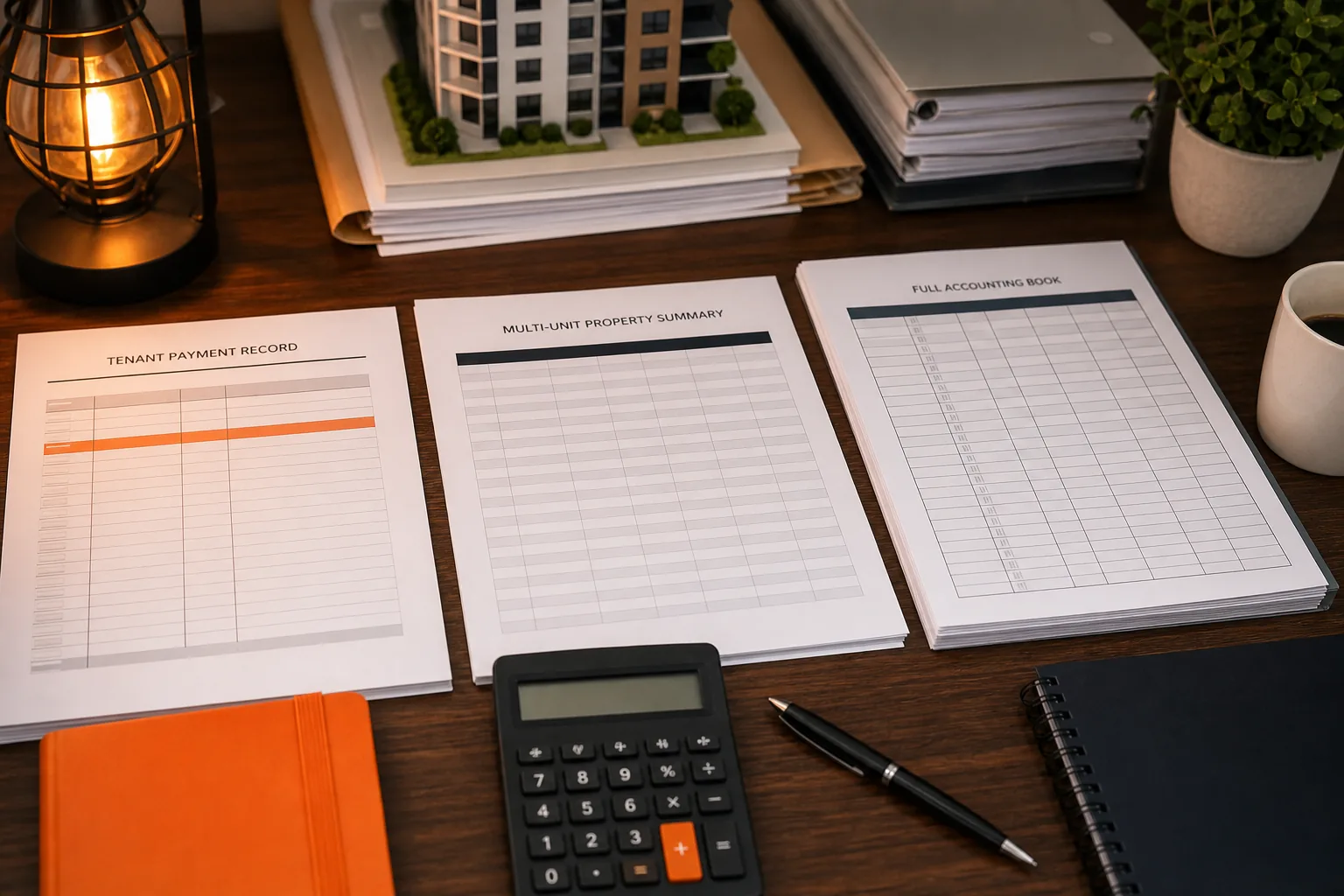
For a renter, the most useful copy is the tenant-level record. Ask for it in writing if you need to check a balance or prepare a rental application. Proof of on-time rent can also support a future application, especially when your credit file is thin. The guide to credit score requirements for renting explains why rental history may matter in that setting.
For an owner with several units, a rent roll gives the quick view and each ledger supplies the detail. For tax work, send the general ledger and supporting records to the tax professional rather than treating a rent ledger as a complete tax book.
Common Rental Ledger Mistakes to Avoid
Most ledger problems come from missing context, not difficult math. Watch for these errors:
- Recording only successful payments: A missed charge or returned payment can leave the balance wrong.
- Hiding partial payments: Enter the amount paid and the amount still due.
- Skipping late-fee notes: Record the fee, its date, and the lease clause or notice tied to it.
- Changing old rows without a note: Keep a correction trail so both sides can see what changed.
- Using mixed formats: One consistent system is easier to audit.
- Failing to back up the file: A lost spreadsheet can erase months of proof.
Don't assume a ledger proves that every charge is lawful. It proves what was recorded. Compare disputed fees with the lease and the rules in your state. For example, a renter checking a Florida fee should review the written lease terms and current state guidance rather than rely on a generic template. LeaseGuard AI can also help flag fee language before you sign.
Rental Ledger FAQ
What is a rental ledger used for?
A rental ledger is used to track rent charges, payments, fees, credits, and balances for a tenant or unit. Renters can use it to prove payment history. Landlords can use it to review account status. It can also help resolve a dispute because each entry connects a money event with a date and a rent period.
Can a tenant request a copy of a rent ledger?
Yes, a tenant can ask for a copy of the rent ledger in writing. Some jurisdictions may require a landlord to provide payment records, but the rule depends on location. Ask for the date range you need and keep your request, the response, and your own payment receipts together.
Is a rental ledger legally required?
A rental ledger is not required in every jurisdiction. Some state or local rules may require written rent records or receipts, while others do not list specific ledger fields. Nevada and Washington illustrate that statutory detail can differ. Check the rules for the property's location before relying on a template.
How long should I keep a rental ledger?
Keep the rental ledger for as long as you may need to prove payment, charges, or a deposit accounting. There isn't one universal retention period in the sources reviewed here. Keep the lease, receipts, bank confirmations, notices, and ledger together. A local housing professional can explain any longer period that applies.
Conclusion
Keep a tenant-level ledger and update it after every rent payment, fee, or credit. Save the matching receipt beside the file, then ask LeaseGuard AI to review your lease before you sign if the payment terms are unclear. Upload your lease when you're ready and use the plain-language report to decide what questions to raise.
This article is general information, not legal advice. Laws vary by state — verify details with your state's landlord-tenant statutes or a licensed attorney.
Check Your Own Lease Now
Everything in this guide applies to leases in general — but your lease may have specific clauses that need their own review. Upload it free.
Analyze My Lease — Free