Ever signed a lease with roommates and wondered why you could be on the hook for their mistakes? That’s joint and several liability in action. Below we break it down, show how it works in a lease, and tell you what to watch for before you sign.
What Joint and Several Liability Means in Plain English
Joint and several liability is a legal phrase that says every tenant on one lease can be held responsible for the whole rent and any damages. It doesn’t matter who actually caused the problem: the landlord can chase any name on the lease for the full amount.Tenant Resource Center explains that the rule applies to the lease as a whole, not to each person’s share.
Imagine three roommates share a two‑bedroom apartment. One roommate punches a hole in the wall and leaves town. The landlord can bill the remaining two for the full repair cost, not just a third of it. The tenant who stayed put ends up paying the bill because the lease ties them all together.
Why does this matter to you? Even if you have a perfect credit score, a roommate’s missed rent or damage can hit your bank account. The lease itself gives the landlord that right.
Knowing the rule lets you plan ahead. Talk to your roommates about how you’ll split costs, and consider a written roommate agreement that can help you get reimbursed later. If you need a quick way to see if a lease contains this clause, try LeaseGuard AI, it scans the document and flags joint and several language in plain language.
Key Takeaway: Joint and several liability means the landlord can collect the full rent or damage bill from any tenant, regardless of who caused the loss.
How It Works in a Rental Agreement
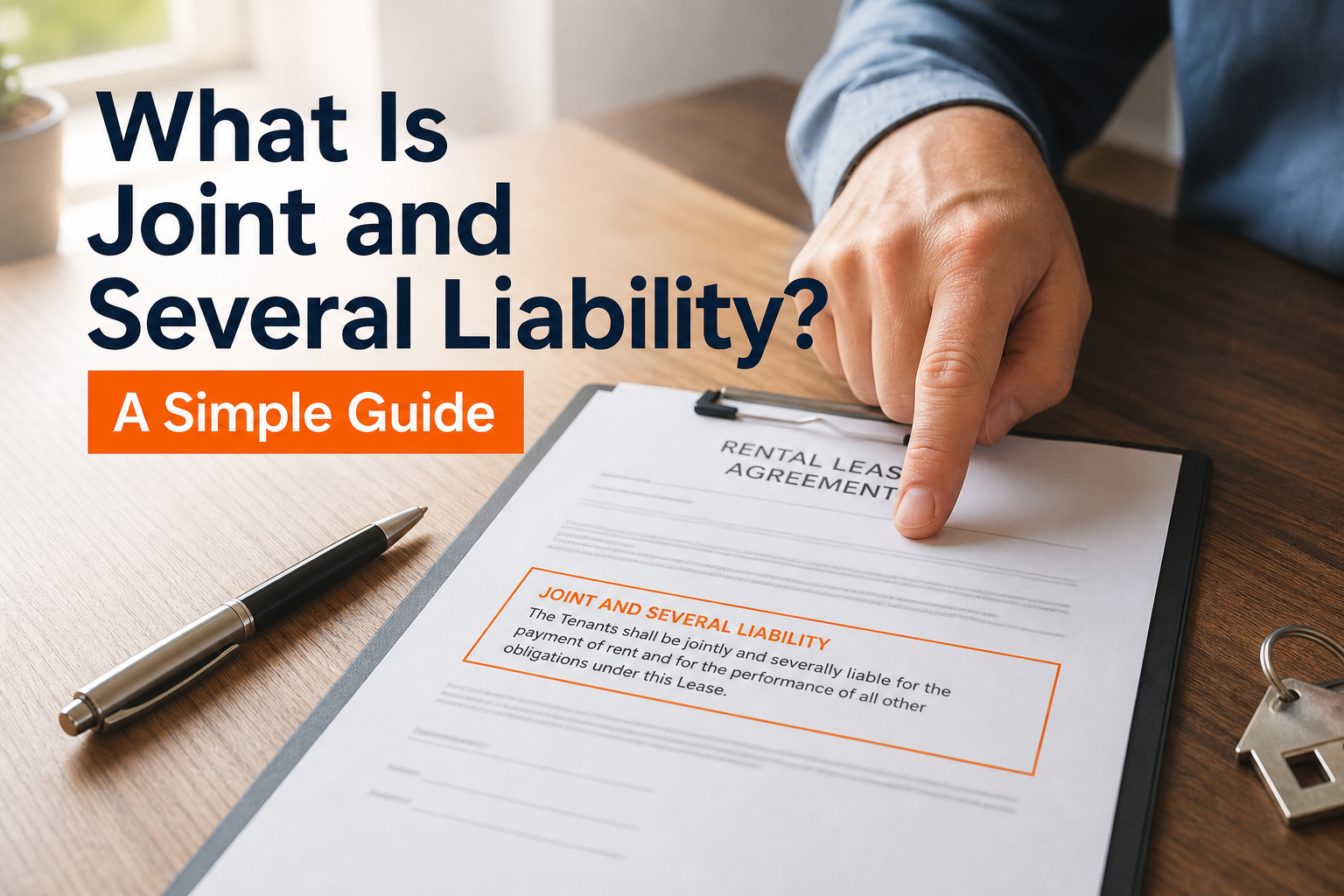
Most leases that list more than one tenant include a clause that reads something like, “Each tenant is jointly and severally liable for all obligations.” That sentence pulls the whole group into one legal unit.
When three people live there, the landlord can demand the full monthly rent from any one of them. If one tenant walks out, the remaining two must cover the shortfall or the landlord can sue the absent tenant for the full amount.
Damage works the same way. If a pet scratches the floor and the cost to repair is $500, the landlord can take the $500 from any tenant. The tenant who pays can then pursue the pet owner for reimbursement, but the landlord doesn’t have to sort out who caused the damage.
Because the clause treats the tenants as a single entity, notice requirements simplify. A single rent notice sent to any tenant counts as notice to all, and an eviction filing can name all tenants at once. This can save landlords time and reduce legal costs.
| Scenario | What the landlord can do | What the tenants can do |
|---|---|---|
| One roommate stops paying | Collect full rent from any other roommate | Pay the rent, then sue the non‑paying roommate for their share |
| Roommate damages property | Seek total repair cost from any tenant | Recover damages from the responsible roommate |
Because the clause packs all obligations into one contract, you never have separate leases for each roommate. That means you can’t split the lease into “my part” and “their part” in court, it’s all one piece.
Pro Tip: When you review a lease, look for the exact phrase “jointly and severally liable.” If it’s missing, ask the landlord to add it before you sign.
For renters in Florida, the Florida hidden lease fees guide shows how this clause often appears alongside other fees that can surprise you.
LeaseGuard AI is an AI-powered lease-review service. LeaseGuard AI provides informational analysis only; it is not a law firm.
What It Can Mean for Roommates, Co‑Signers, and Guarantors
If you’re sharing a place, the joint and several rule binds each roommate to the whole lease. That means if you’re the one who pays rent every month, you could still be on the hook for a wall repair you never caused.
Co‑signers face the same risk. A parent who co‑signs for a college student’s apartment becomes a tenant in the eyes of the lease. If the student skips rent, the parent can be sued for the entire amount.
Guarantors get an even tighter grip. A lease guarantor signs a separate document promising to pay any debt the tenants owe. Under joint and several liability, the guarantor can be chased for the full balance, even if only one tenant defaulted. A guarantor who can’t cover the debt may file for bankruptcy, leaving the landlord to chase the remaining tenants.
Because the liability spreads, many renters protect themselves with renter’s insurance that covers accidental damage. The insurance won’t cover missed rent, but it can soften the blow of a sudden repair bill.
Having a written roommate agreement helps. It can spell out how you’ll split costs and give you a paper trail if you need to sue a roommate for their share. Remember, the landlord won’t enforce that agreement, it’s just for you.

In Boston, the local leasing agency notes that most multi‑tenant leases automatically include joint and several language, so renters should assume it’s there unless the lease says otherwise.
Risks to Check Before Signing—and How LeaseGuard AI Can Help
Before you ink a lease, scan for these red flags:
- Missing or vague joint and several language, ask for clarification.
- Separate rent checks for each roommate, that can imply separate obligations, which may weaken joint liability.
- Security‑deposit clauses that split the deposit among tenants, the landlord may keep the whole deposit for any damage.
If the lease has a guarantor, verify that the guarantor’s income meets the landlord’s standards and that the guaranty text explicitly says “jointly and severally liable.” Without that phrasing, a court might treat the guarantor’s responsibility as proportional.
LeaseGuard AI can run through a lease in seconds, highlight any joint and several clauses, point out vague language, and suggest wording changes. The AI also flags state‑specific nuances, for example, California limits some economic damages, while Texas enforces the clause fully.
After you get the AI report, you can bring it to the landlord and ask for edits. Most landlords are happy to adjust wording if you show they’ll still be protected.
Want a step‑by‑step guide on what to do if you need to break a lease? Check out our step‑by‑step lease break guide for a clear roadmap.
Key Takeaway: Spotting joint and several language early lets you negotiate better terms or decide if the rental is worth the risk.
FAQ: Joint and Several Liability
What does joint and several liability mean for me as a renter?
It means you can be sued for the entire rent or damage bill, even if a roommate caused the problem. The lease treats all tenants as one legal party.
Can a landlord sue just one roommate for the full amount?
Yes. The landlord may pick the tenant who’s easiest to collect from and pursue the whole debt against that person.
Conclusion
Joint and several liability can turn a roommate’s mistake into your financial burden, so read every lease clause carefully. Use LeaseGuard AI to flag risky language, then negotiate any changes before you sign. Ready to see the risks in your own lease? Upload it now and get a plain‑language risk summary in seconds.
This article is general information, not legal advice. Laws vary by state — verify details with your state's landlord-tenant statutes or a licensed attorney.
Check Your Own Lease Now
Everything in this guide applies to leases in general — but your lease may have specific clauses that need their own review. Upload it free.
Analyze My Lease — Free