Small wall scuffs and worn carpet can look alarming when you move out. But aging from normal use usually belongs to the landlord, not the tenant. Here’s how to separate wear from damage, check your lease, document the unit, and push back on an unfair deposit charge.
Step 1: Separate Normal Wear and Tear From Tenant-Caused Damage
The first step in understanding what is normal wear and tear in an apartment is to ask how the problem happened. Normal wear comes from ordinary use over time. Tenant-caused damage usually comes from carelessness, misuse, neglect, or an intentional act.
Small nail holes, light wall scuffs, faded paint, and carpet worn down in busy paths usually fit the first group. A large punched hole, deep gouge, pet urine stain, broken fixture, or unauthorized paint color usually fits the second.
The line can still be gray. A few nail holes may be normal, while many large holes may go beyond ordinary use. A loose cabinet knob may need routine maintenance. A cabinet door ripped off its hinges points to damage.
| Condition | Usually normal wear | Possible tenant damage |
|---|---|---|
| Walls | Light scuffs, faded paint, small nail holes | Large holes, drawings, heavy stains, unapproved paint |
| Carpet | Flattened paths, fading, ordinary wear | Burns, tears, pet urine, severe stains |
| Appliances | Age-related failure or worn finish | Breakage caused by misuse or ignored tenant-caused damage |
| Blinds and screens | Fading or ordinary aging | Missing parts, bent slats, or torn screens from misuse |
HUD guidance treats normal deterioration from use as the landlord’s responsibility. The same source lists useful lives for items such as hot water heaters, air conditioning units, refrigerators, ranges, paint, flooring, and blinds. If an item is near or past that useful life, a landlord generally can’t charge you for replacing the whole item simply because it failed.
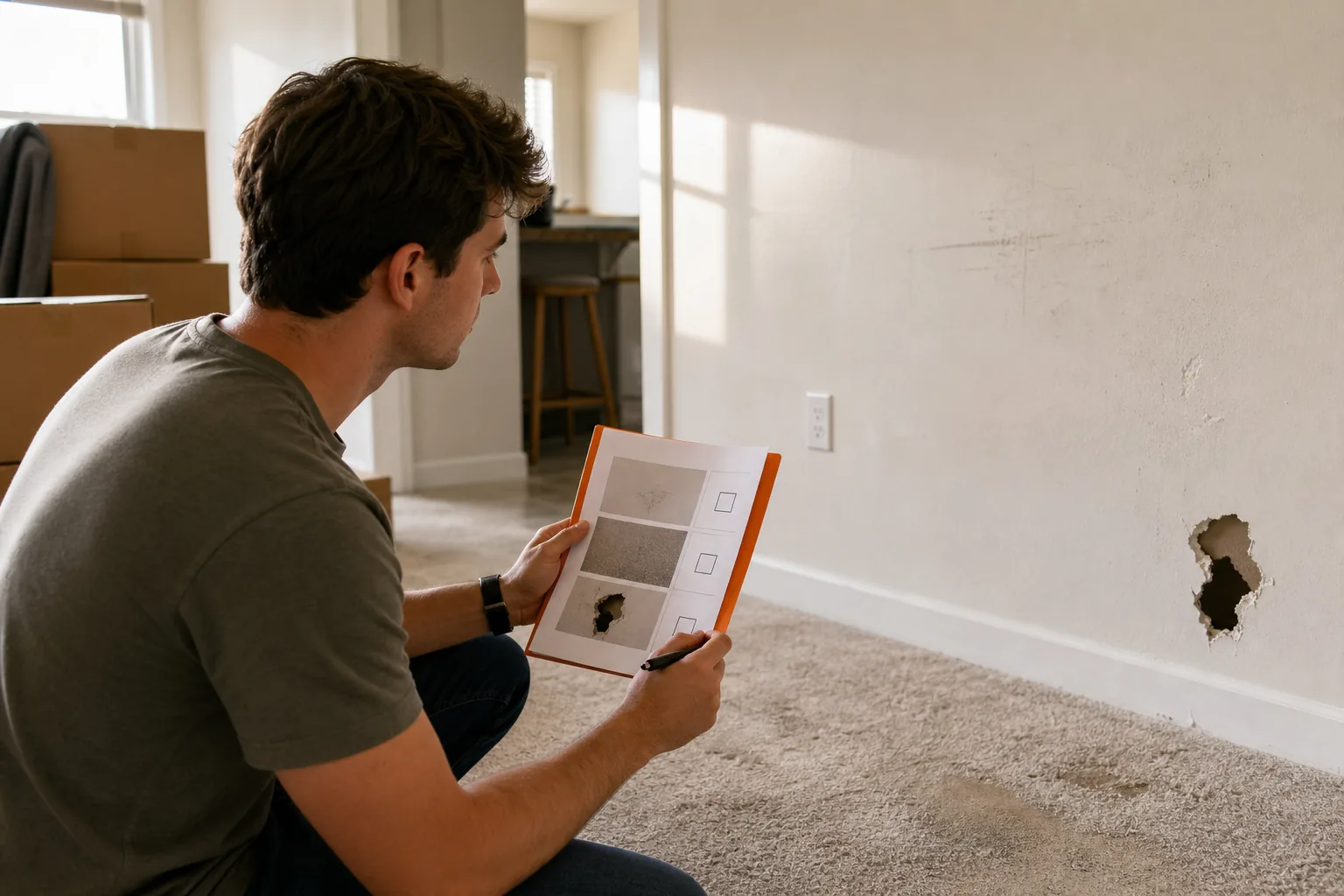
For a plain-language review of the terms that may affect your deposit, learn when a landlord can charge for painting. The lease may add rules about wall holes or cleaning, but it can’t always override state deposit law.
When you’re unsure, compare the size, age, cause, and repair needed. Those four facts often tell you more than the landlord’s label.
Step 2: Check the Lease, Useful Life, and State Deposit Rules
Normal wear and tear apartment disputes often turn on three documents: your lease, the move-in condition report, and applicable deposit rules. Read all three before you accept a deduction.
Start with the lease. Look for clauses about:
- Cleaning standards at move-out
- Wall holes, paint, and alterations
- Pet damage and smoking
- Carpet cleaning
- Notice rules for repairs or maintenance
- Deposit deductions and itemized statements
A lease may say you must return the apartment in the same condition as move-in, except for normal wear. That does not mean the walls must look brand new. It means you must return the unit without damage beyond ordinary use.
Next, check the age of the item. Useful life affects the amount a landlord may fairly claim. A three-year-old carpet with a five-year useful life has roughly two years of life left. If you caused damage that requires replacement, the charge should reflect that remaining value, not the price of brand-new carpet as if the old carpet had no age.
The same logic applies to appliances. A hot water heater or refrigerator that fails because it has reached the end of its useful life is different from an appliance damaged by misuse. A tenant generally should not pay for an old item that simply stopped working.
State rules vary. Some laws require a written checklist, receipts, an itemized statement, or a deposit return within a set time. Documentation requirements can affect whether certain deductions are allowed. You can review an example of statutory text addressing checklists and charges.
Other states use different terms or deadlines. Don’t assume a rule from a friend’s state applies to your apartment. If you rent in Florida, the Florida tenant rights guide can help you spot deposit clauses and other lease terms that deserve a closer look.
LeaseGuard AI can scan your rental agreement for risky clauses, fees, and tenant-protection issues. It produces a plain-language report, which can help you find the clause that controls cleaning or damage claims before you argue about a deduction.
One caution: a lease clause may be enforceable even when it feels unfair, while another may conflict with state law. Treat the lease as a starting point, not the final answer.
Step 3: Build Move-In and Move-Out Evidence
Good evidence turns a vague deposit dispute into a side-by-side comparison. The goal is to show what changed during your tenancy and what was already present.
At move-in, take wide photos of each room first. Then take close photos of marks, stains, chips, cracks, appliance wear, flooring, cabinets, windows, and bathroom fixtures. Photograph inside appliances too. Record a slow video while you walk through the unit.
Make the images easy to match later. Use a simple file system such as “kitchen-counter-left” or “bedroom-wall-window.” Keep the original files. If your phone records the date, keep that information intact.
Put the same details in the condition report. Don’t write “some damage in the bedroom.” Write “two small nail holes above the desk and a three-inch scuff beside the closet.” Specific notes are easier to compare.
At move-out, repeat the same route. Stand in similar spots. Take the same types of photos. If the carpet looked worn when you arrived, show that wear again. If a leak caused a stain, save the maintenance request that reported it.
Report problems during the lease, even when they seem minor. A water leak that becomes a floor stain may be blamed on you if you never told management. A dated repair request gives you a record of notice.
Keep copies of emails, texts, inspection forms, receipts, cleaning records, and the final deposit statement in one folder. Don’t rely on a landlord portal that may remove old messages after you move.
Digital evidence can help, but it cuts both ways. Photos may show that a problem was present before move-in. They may also show damage caused during the lease. Save honest records, not only the images that support your side.
A short video is useful when it shows the full room and then the detail. A blurry close-up with no location may not prove much. Aim for context first, detail second.
Step 4: Calculate Whether a Cleaning or Repair Charge Is Proportional
A deposit deduction should match the actual work needed to fix tenant-caused damage. It should not become a way to charge you for routine turnover work, upgrades, or a full replacement of an old item.
Ask for an itemized statement. Each line should identify the problem, the work performed, and the amount charged. Request invoices, receipts, photos, or a repair estimate when the charge is unclear.
Cleaning needs careful review. Routine cleaning between tenants is usually part of turnover. A charge may be more defensible when the unit has unusual dirt, heavy grime, or contamination that goes beyond ordinary use and requires extra work. Carpet cleaning is often treated as a partial exception, but the landlord should be able to show why it was needed.
Compare the charge with the condition. A landlord who charges for repainting should explain why touch-up work would not fix the problem. If one wall has a large hole but the rest of the room only needs routine paint, a charge for the whole unit may be excessive.
Use proportional math. Suppose a damaged wall accounts for one quarter of the work needed in a room. A reasonable claim may focus on that wall, not every wall in the apartment. The exact amount depends on local law, the repair quote, the item’s age, and the damage itself.
Depreciation matters too. HUD’s example treats a damaged three-year-old carpet with a five-year life as having 40 percent of its replacement life remaining. That does not set the rule in every state, but it shows why a landlord should not charge full replacement cost without considering age.
State-specific rules matter. A rule may address cleaning, repair claims, notice, or documentation in a way that differs from the general rule you find online.

LeaseGuard AI can help you identify lease language about cleaning fees, repair charges, and deposit deductions. Use its report to mark the clause, then compare that clause with your state’s current rules.
Don’t accept a charge just because it appears on official-looking stationery. Ask what changed, why it was your responsibility, and how the amount was calculated.
Step 5: Challenge an Improper Deduction and Protect Your Next Lease
If a deduction looks wrong, respond in writing. Keep your tone calm and stick to facts. State the charge you dispute, explain why it appears to be normal wear or pre-existing damage, and attach the strongest records.
Build the letter around a simple sequence:
- Identify the deduction and amount.
- Describe the move-in condition.
- Describe the move-out condition.
- Point to the lease clause or state rule that supports your view.
- Request the disputed amount or supporting documents.
Give a reasonable deadline based on your state’s process. Send the letter through a method that creates a record. Save the letter and proof of delivery.
If the landlord refuses, contact a local tenant-help group, legal aid office, or housing agency. Small-claims court may be an option, but the process and available damages vary by state. This article is general information, not legal advice.
Protect your next lease before you sign it. Ask how the landlord defines cleaning, carpet replacement, paint, pet damage, and inspection records. Make sure promised repairs appear in writing.
LeaseGuard AI is useful before signing because it reviews the lease itself, not just a landlord’s summary. Upload the agreement and review the plain-language risk report before you pay a deposit.
FAQ
What is normal wear and tear in an apartment?
Normal wear and tear is the gradual change caused by ordinary use and age. Examples include faded paint, small scuffs, light carpet wear, and a few small nail holes. Tenants usually aren’t charged for these conditions, though state law and the lease can change how a specific dispute is handled.
Can a landlord charge for normal wear and tear?
A landlord generally can’t charge a tenant for normal wear and tear because routine aging is part of maintaining a rental. A charge may be allowed when the condition goes beyond ordinary use, such as a large wall hole, severe carpet stain, or broken fixture caused by misuse. Ask for an itemized explanation.
Can an apartment charge for carpet cleaning?
An apartment may charge for carpet cleaning when the carpet needs extra work because of tenant-caused dirt or damage, but routine turnover cleaning is a different issue. The answer depends on state law, the lease, and the carpet’s condition. Ask for photos and an itemized charge before accepting the deduction.
How do I prove damage was already in my apartment?
You can prove pre-existing damage with dated move-in photos, video, a signed condition report, and messages sent to management. Match each move-in image with a move-out image from the same angle. Maintenance requests also help show that you reported leaks or defects before they became worse.
When a deposit dispute starts, compare the condition instead of arguing over labels. Save your photos, request the itemized charge, and review the lease before you respond. If you’re signing a new rental agreement, upload it to LeaseGuard AI to see the clauses that may affect your deposit. LeaseGuard AI provides informational analysis only; it is not a law firm.
This article is general information, not legal advice. Laws vary by state — verify details with your state's landlord-tenant statutes or a licensed attorney.
Check Your Own Lease Now
Everything in this guide applies to leases in general — but your lease may have specific clauses that need their own review. Upload it free.
Analyze My Lease — Free