
A lease can demand months of future rent after a default, early move-out, or another breach. That demand is often called rent acceleration, and the amount may be hard to predict because state rules differ and no standard cap applies across the U.S. Here are 10 ways to spot, limit, or challenge the risk before you sign.
1. LeaseGuard AI: Find acceleration clauses before you sign
LeaseGuard AI is an AI-powered residential lease reviewer for renters who want plain answers before signing. It scans a rental agreement for risky clauses, extra fees, and tenant-protection issues.
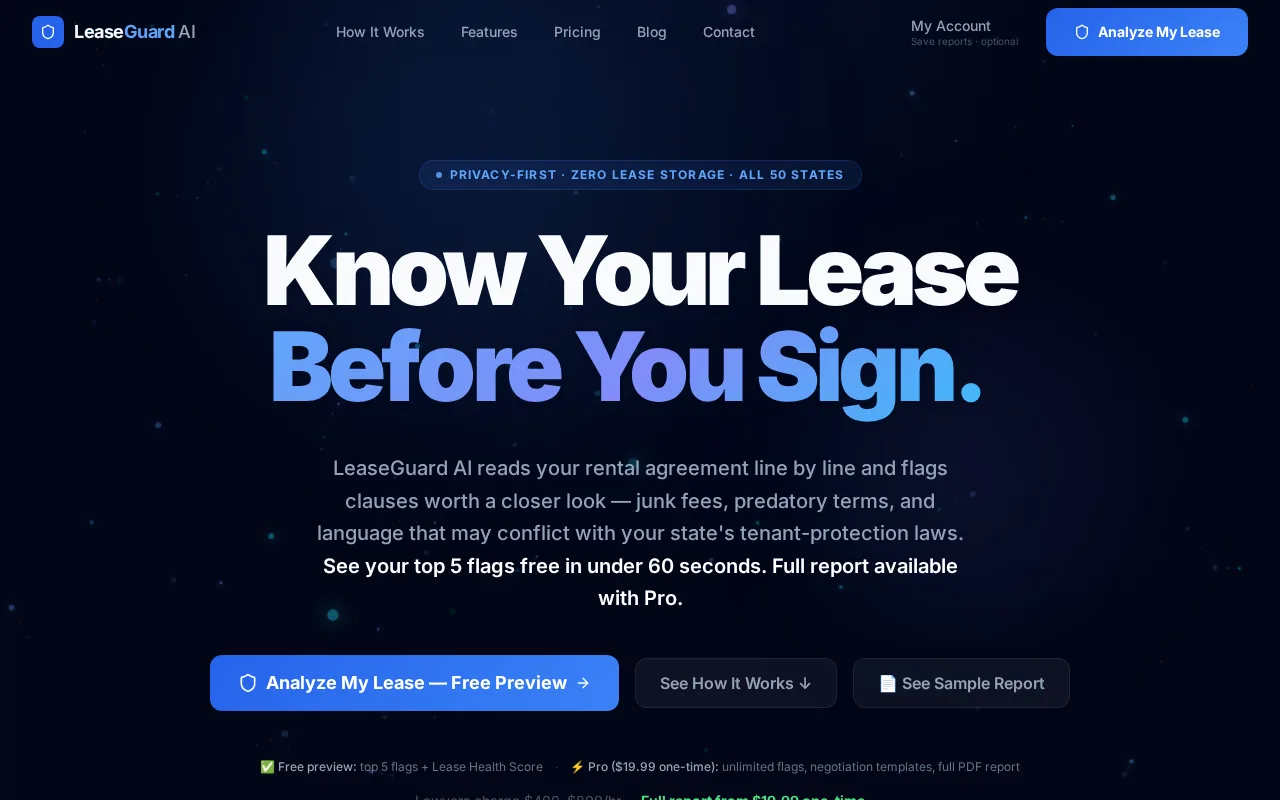
For accelerated rent charges, the useful part is clause discovery. A lease may bury the term inside default remedies or an early-termination section. LeaseGuard AI turns that wording into a plain-language report and gives you negotiation guidance. It can also help you spot related terms, such as a lease-break fee or a broad collection clause.
Upload the lease before you pay a deposit. Compare the report with the exact clause, since an AI review is a starting point rather than legal advice.
2. Negotiated Lease-Break Fee: Replace an open-ended demand
A negotiated lease-break fee gives the renter a known exit cost instead of leaving future rent open-ended. It works best when the lease states the fee clearly and says what other rent claims it replaces.

Ask for a fixed amount tied to an early move-out. The clause should also say when the fee is due and whether the landlord must credit rent received from a replacement tenant. That last point matters. A landlord who collects from a new renter may not have the same loss as a landlord with a vacant unit.
Get the change in the signed lease or an addendum. A spoken promise from a leasing agent won't protect you if the written contract says something else. Review any addendum carefully, since an addendum can change the main lease terms.
For help with that review, to what a lease addendum means for renters.
3. Partial-Payment Remedy: Limit liability after a breach
A partial-payment remedy limits the claim to rent that is actually due or to a defined period after the breach. It is a better fallback than a clause demanding every remaining payment at once.

For example, a lease might require rent through the date the unit is relet, subject to the renter's other rights. The clause can also require a credit for rent collected from a replacement tenant. Put the formula in writing. Words such as “all remaining rent” leave too much room for dispute.
Tax rules may describe a defined recovery period for residential rental property, but that does not decide a renter's lease liability. Keep tax rules separate from contract rules when reviewing a demand. The tax guidance on residential rental property is useful background, not a substitute for state-law review.
Ask the landlord to state the balance month by month. A payment history can expose duplicate charges or rent already covered by a deposit.
4. Fair-Market-Rent Differential Clause: Avoid charging a windfall
A fair-market-rent differential clause calculates loss by comparing the rent reserved under the lease with the rent the unit could earn after re-renting. It avoids treating every remaining month as an automatic debt.

This approach matters when a landlord retakes the unit and finds a new renter. The claim should account for that new income. A clause that lets a landlord collect the full balance and then keep new rent may look more like a penalty than a measure of loss.
A legal analysis of accelerated rent clauses describes state-specific treatment and recommends basing default remedies on the difference between total reserved rent and fair-market rent. It also gives an example of wording that bars a landlord from seeking a judgment for accelerated rent through the end of the tenancy. of accelerated rent clauses and fair-market rent for the source discussion.
That source concerns commercial leases and Massachusetts law. Use the drafting idea as a negotiation point, not as proof that the same result applies to a Florida apartment.
5. Cure-Period Clause: Give renters time to fix a default
A cure-period clause gives the renter time to fix a lease breach before the landlord seeks an accelerated balance. It can prevent a missed payment or correctable violation from turning into a full lease claim.

Ask the lease to state four details:
- What event counts as a default.
- How notice must be delivered.
- How many days you have to cure.
- What happens after you cure.
The cure period should apply before acceleration, not only before eviction. Those are separate issues. A lease may give notice for possession while still claiming future rent, so read both sections together.
If the clause uses vague terms such as “immediate default,” ask the landlord to define them. Clear timing is worth more than a friendly verbal explanation.
6. State-Law Limitation Review: Check whether acceleration is enforceable
State law controls much of the risk around accelerated rent charges. A clause can appear in a lease and still face limits on enforcement, damages, notice, or collection.

Florida renters should not assume that a signed clause settles the question. Check the current lease statutes and ask a Florida housing lawyer or legal aid group about the exact facts. The clause's label is not enough. Courts may look at the remedy, the landlord's actual loss, and whether the landlord receives rent from a replacement tenant.
- Miami: Review any late fee, lease-break fee, deposit deduction, and future-rent demand separately.
- Kissimmee: Ask which state rule supports the demand and request a written calculation.
- St. Cloud: Check the default section beside the termination section.
- Orlando: Request credit for rent received after re-renting.
- Tampa: Keep notices and payment records together.
- Jacksonville: Ask whether the landlord is claiming rent, damages, or a fee. Those labels can affect the analysis, but no amount can be assumed here.
- Tallahassee: Check the lease against current Florida law before paying a disputed balance.
LeaseGuard AI can flag the wording for review, but it can't decide enforceability. State-law research must follow the document scan.
7. Notice-and-Cure Protection: Challenge unclear collection demands
Notice-and-cure protection requires the landlord to explain the breach and give the renter a stated chance to fix it. It is especially useful when a collection letter demands future rent without showing the trigger.

When a demand arrives, ask for:
- The lease paragraph being enforced.
- The date of the alleged default.
- The rent balance by month.
- Credits for payments, deposits, or new rent.
- The deadline to dispute the claim.
Don't ignore the letter. Reply in writing, keep copies, and avoid admitting an amount you have not checked. A clear record can help if the matter reaches a collector or court.
Florida renters should also check whether the notice method matches the lease and current state rules. A missing notice may matter, but only a qualified local adviser can assess its effect.
8. Security-Deposit Offset: Clarify what the deposit can cover
A security-deposit offset applies money already held by the landlord to allowed charges. It should not quietly become an extra payment on top of an accelerated balance.

Ask the lease to explain whether the deposit may cover unpaid rent, damage, cleaning, or a lease-break charge. Then ask for an itemized statement after move-out. The landlord should not charge the same month twice, once against the deposit and again as future rent.
Take photos at move-in and move-out. Keep your final payment proof beside the inspection record. If the deposit is disputed, LeaseGuard AI's guide on a landlord not returning a security deposit can help you organize the next questions.
A deposit may reduce a balance, but it doesn't automatically erase a claim. The lease and current Florida rules still control.
9. Estate and Vacancy Liability Review: Handle death or early move-out scenarios
An estate and vacancy review is for difficult events such as a tenant's death, a sudden move, or a unit left empty. These cases can trigger an attempt to bill the estate for future rent.

Start with the lease's death and termination language. Then check state law before an executor, family member, or roommate signs anything. The person who handles an estate may have duties that differ from those of a co-tenant or guarantor.
A reported Texas example involved a family receiving a demand for future rent after a tenant died. The video described a state rule allowing an estate representative to avoid future-rent liability after removing the tenant's property and giving written termination notice, with rent limited to a stated period after notice. That example is Texas-specific and cannot be applied to Florida.
For a Florida case, save the lease, death certificate if appropriate, notices, keys record, and every collection letter. Don't let grief or urgency push you into signing a new acknowledgment without review.
10. Collection and Credit Safeguards: Reduce post-default damage
Collection and credit safeguards help limit harm after a landlord claims accelerated rent. A disputed balance can move from a property ledger to a collector, so act before the file becomes harder to correct.

Build one folder with:
- The signed lease and addenda.
- Payment confirmations.
- Move-in and move-out photos.
- Notice letters and emails.
- The landlord's itemized calculation.
Ask for written confirmation when a balance is paid or settled. If a collector contacts you, request the debt details and compare them with your records. Don't send sensitive documents through an unverified channel.
Credit reporting rules and collection rights can depend on the account, the notice, and the parties involved. LeaseGuard AI can help you understand the lease language, but a consumer-law attorney or legal aid group is the better source for a live collection dispute.
Compare the 10 Accelerated Rent Charges Options
The best choice depends on where you are in the process. Before signing, clause review has the most value. After a dispute starts, records and a written calculation matter more.
| Option | Best use | Main protection | Key limitation |
|---|---|---|---|
| LeaseGuard AI | Before signing | Finds risky wording and explains it plainly | Does not decide legal enforceability |
| Negotiated lease-break fee | Planning an early move | Sets a known exit cost | Must be written into the lease |
| Partial-payment remedy | After a breach | Limits the claim to defined loss | Needs a clear formula |
| Fair-market differential | Unit is relet | Credits replacement rent | Market rent may be disputed |
| Cure period | Fixable default | Creates time to correct the breach | Does not erase a missed deadline |
| State-law review | Any Florida dispute | Tests local limits | Rules can change and facts matter |
| Notice-and-cure protection | Unclear demand | Requires breach details | Notice rights vary by rule and lease |
| Security-deposit offset | Move-out accounting | Credits funds already held | Does not cover every claimed loss |
| Estate and vacancy review | Death or sudden move | Separates estate duties from lease claims | State law controls |
| Collection safeguards | Post-default contact | Builds proof and limits errors | May require legal help |
FAQ
What are accelerated rent charges?
Accelerated rent charges are claims for rent that would normally come due later in the lease. A landlord may point to them after a default, breach, vacancy, or early termination. The amount depends on the contract and applicable state law. Renters should ask for a month-by-month calculation and any credit for replacement rent.
Can a Florida landlord charge all future rent?
A Florida landlord's ability to claim future rent depends on the lease, current Florida law, the reason for termination, and the landlord's actual loss. No nationwide rule answers the question. Don't assume the clause is valid or invalid from its title alone. Have the exact wording reviewed before paying or admitting the balance.
How are accelerated rent charges calculated?
Accelerated rent charges may be calculated from the rent left on the lease, but a fairer remedy may subtract rent received from a replacement tenant. Request the dates, monthly figures, credits, fees, and deposits used in the landlord's math.
How can LeaseGuard AI help with lease review?
LeaseGuard AI is an AI-powered residential lease reviewer that can help renters identify lease clauses related to fees, default remedies, and tenant protections. It provides informational analysis only; it is not a law firm.
For most renters, the first move is simple: review the lease before signing and ask for a defined remedy instead of open-ended future rent. Upload your lease to LeaseGuard AI to spot acceleration language and prepare better questions, then verify the result against current Florida law or qualified legal help.
This article is general information, not legal advice. Laws vary by state — verify details with your state's landlord-tenant statutes or a licensed attorney.
Check Your Own Lease Now
Everything in this guide applies to leases in general — but your lease may have specific clauses that need their own review. Upload it free.
Analyze My Lease — Free