Rent may look fixed, but many landlords will discuss the price or trade it for better terms. The strongest requests use local listings, good timing, and a clear backup plan. Here’s how to negotiate rent without making the conversation awkward or combative.
Step 1: Research Comparable Rents and Set Your BATNA
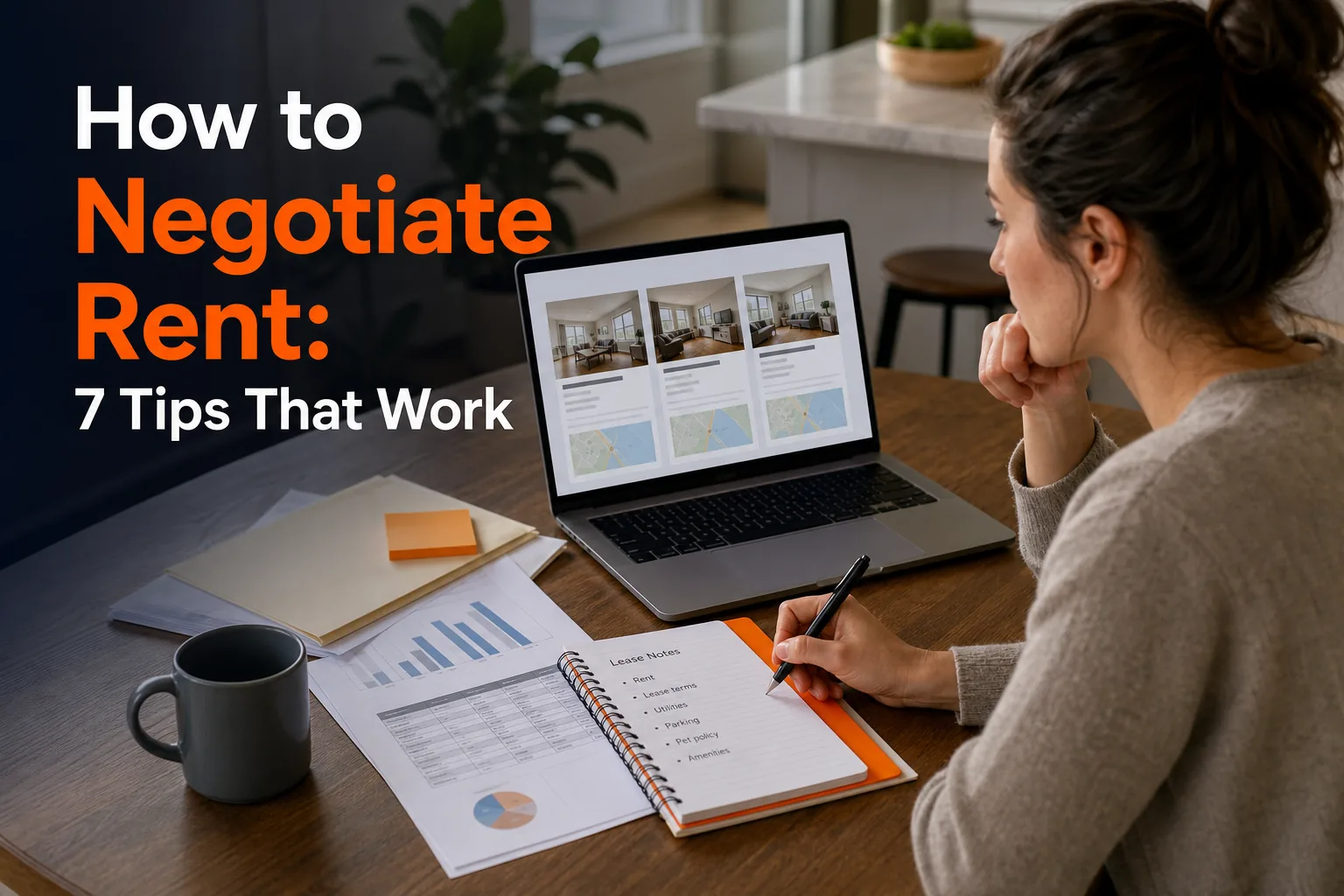
To learn how to negotiate rent, start with facts. Find at least three listings that match your unit in size, location, condition, parking, and other key features.
Save the listing links and take screenshots. Rentals can disappear once they’re leased. Compare the full monthly cost, not only the advertised rent. A unit with a lower base price may charge more for parking, pets, utilities, or amenities.
Look inside the same building first. Ask the property manager what similar units cost. You can also ask current residents what they pay, though they may not want to share. If you’re renting a single-family home, compare homes with similar space and features in the same area.
Next, set your BATNA. It means “ Best Alternative to a Negotiated Agreement,” or what you’ll do if the landlord says no. BATNA is your best outside option when talks reach a dead end.
Your BATNA might be a different apartment, staying in your current home, moving in with a roommate, or waiting for another listing. Check that option closely. Include its fees, commute, move-in date, condition, and lease terms. A cheaper listing isn’t a strong alternative if it costs more after fees or creates a painful commute.
Set three numbers before you write: your target rent, the highest rent you can accept, and the point where you’ll walk away. This keeps a stressful call from making the choice for you.
LeaseGuard AI can help with the document side of this work. Its AI-powered residential lease reviewer scans rental agreements for risky clauses and fees, then gives you a plain-language report with negotiation guidance. Review the lease before you decide what the apartment is really worth.
Step 2: Choose the Right Timing and Prove Your Tenant Value
Timing changes your odds when you’re learning how to negotiate rent. Start a renewal talk about 60 to 90 days before the lease ends, when the landlord still has time to plan.
Waiting until the last week leaves you with fewer choices. If the landlord refuses, you may not have enough time to compare homes, apply, and move. Early notice also gives the owner time to decide whether keeping you costs less than finding someone new.
New renters can ask before applying or before signing. A listing that has sat for a while may give you more room than a home receiving many applications. Ask if the landlord has pending applications. Don’t assume the answer, but use it to judge how firm the asking rent may be.
Now build a short tenant-value file. Include proof of on-time payments, a reference from a past landlord, proof of income, and a clean move-out record if you have one. Current renters can point to prompt repair reports and careful upkeep. Keep the proof brief. A landlord should understand your case in under a minute.
Offer something useful in return. You might commit to a longer lease, accept a clear move-in date, or pay several months upfront if that fits your budget. Never offer prepaid rent if doing so would leave you short on emergency cash.
Good manners matter. Ask for a discussion instead of accusing the landlord of overcharging. You still need a workable relationship after the negotiation ends.
If the landlord sent a renewal notice, save it beside your research. You can also use this guide to reviewing a rent increase before you respond.
Step 3: Make a Specific Offer With Alternatives and Sample Scripts
The best rent requests name a fair number. Avoid saying, “Can you do better?” Give the landlord a clear choice that connects to your research.
For a renewal, try this:
“I enjoy living here and would like to renew. I found similar units nearby listed at [amount]. Based on those listings and my payment history, would you consider a renewal rate of [amount]? I’d also be open to a longer lease if that helps.”
Keep the request short. Attach two or three matching listings. Explain any major difference, such as a missing parking space or a smaller floor plan. A precise offer feels more serious than a round guess, but don’t pretend your number is legally required.
If the landlord rejects a lower base rent, move to alternatives:
- Keep the current rent for a longer lease.
- Ask for one free month or a rent credit.
- Request free or reduced parking.
- Ask for a utility or internet credit.
- Request a pet, storage, or amenity fee waiver.
- Ask whether the landlord will cover a broker fee where that fee is customary.
A concession lowers your cost without changing the listed base rent. Before accepting one, check its start date, amount, covered charges, and any payback clause if you leave early. The explanation of rent concessions can help you compare the headline rent with the amount you’ll really pay.
Use this response when the landlord says the rent cannot drop:
“I understand. If the base rent must stay at [amount], could we keep it flat for this renewal or include [specific fee waiver or credit]? I’d like to stay, and I’m trying to make the total cost fit my budget.”
For a new apartment, say:
“I’m very interested in the unit. I found similar homes at [amount]. Would you consider [offer] if I submit my application this week and sign a [lease length]-month term?”
Don’t threaten to move unless you’re ready to do it. A bluff can damage trust, and the landlord may simply accept your departure.

LeaseGuard AI can also turn flagged lease terms into plain-language email drafts. That can help when the negotiation involves an administrative fee, early termination clause, pet charge, or another term beyond the monthly rent.
Step 4: Use Vacancy Costs, Review the Lease, and Get the Deal in Writing
Landlord costs can strengthen your case, but use them with care. A move-out may mean lost rent while the unit is empty, cleaning, repairs, new advertising, screening, and leasing work.
That does not mean every landlord will accept a discount. A busy building may replace you quickly. But a unit that has been listed for weeks gives you a reasonable reason to ask what would make renewal worthwhile for both sides.
Frame the point this way: “I’d like to avoid a move if we can agree on a rate that matches nearby listings. Keeping a reliable tenant may also save the time and cost of preparing the unit again.” Then stop. Don’t lecture the landlord about their business.
Before you agree, read the full lease and every addendum. Check the rent schedule, renewal clause, late fee, utility billing, pet charges, parking terms, repair duties, and early termination language. Look for fees that were discussed verbally but never added to the written agreement.
LeaseGuard AI reviews rental agreements for hidden fees and risky clauses, then produces a plain-language report and negotiation guidance. LeaseGuard AI provides informational analysis only; it is not a law firm.
Put every deal in writing. The document should state:
- The new monthly rent or exact concession.
- The lease dates covered by the change.
- Which fees are waived or credited.
- When the credit applies.
- What happens if either side ends the lease early.
Do not rely on “we’ll fix it later.” Ask for a signed amendment or a revised lease before you pay the new amount. If the written terms differ from the conversation, pause and ask for a correction.
Rent rules vary by state and city. Some places have rent stabilization, subsidy programs, or limits on certain fees. A local housing agency or tenant-rights group can tell you which rules apply. Market evidence helps you negotiate; it does not replace local legal guidance.
FAQ
Can you negotiate rent with a landlord?
Yes, you can ask to negotiate rent, but the landlord doesn’t have to agree unless a specific local rule or contract term says otherwise. Your request is stronger when you bring comparable listings, show a reliable payment record, and offer a clear trade such as a longer lease. The landlord may also prefer a fee waiver or credit over a lower listed rent.
When should I ask for a lower rent?
Ask about 60 to 90 days before your lease ends when possible. Early talks give you time to compare other homes and give the landlord time to plan for renewal or turnover. For a new rental, ask before you apply or sign, especially if the listing has been available for a while. Keep the request polite and specific.
What should I say when negotiating rent?
Say that you want to stay, share matching market listings, and name the rent you can accept. For example: “I’d like to renew, and similar units are listed at [amount]. Would you consider [offer] based on those listings and my payment history?” If the landlord says no, ask about a flat renewal rate or a fee waiver.
What does LeaseGuard AI review?
LeaseGuard AI scans agreements for hidden fees and risky clauses, then generates a plain-language report and negotiation guidance.
Start with the numbers, make one reasonable offer, and keep a backup plan. Before signing or renewing, upload your lease to LeaseGuard AI to check for hidden fees and risky terms, then use the report to guide your next conversation.
This article is general information, not legal advice. Laws vary by state — verify details with your state's landlord-tenant statutes or a licensed attorney.
Check Your Own Lease Now
Everything in this guide applies to leases in general — but your lease may have specific clauses that need their own review. Upload it free.
Analyze My Lease — Free