You’ve got a lease in hand and a clause that says you must have renters insurance. Here’s the quick rundown of what that means, how it works, and what to watch for before you sign.
What Renters Insurance Requirements Usually Mean
Most landlords ask for a minimum of $100,000 personal‑liability coverage. The policy also usually includes personal‑property coverage, often $15,000 to $30,000, but landlords rarely dictate that part.
Why do they care? Liability protects them if a guest gets hurt or you cause damage. Your own belongings stay out of the landlord’s policy, so a renters policy fills that gap.
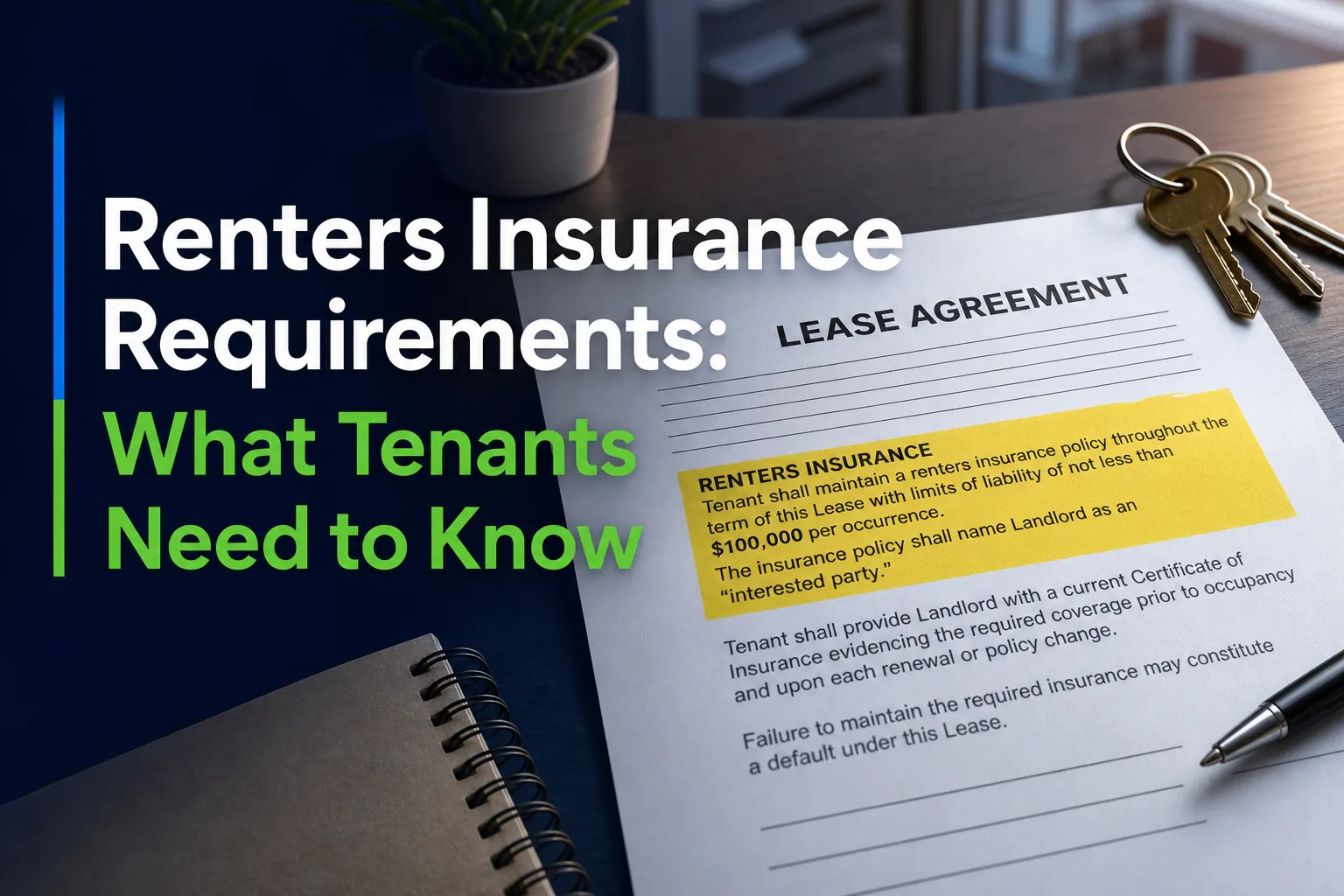
Typical clause language looks like this: “Tenant shall maintain renters insurance with at least $100,000 liability and name Landlord as an interested party.” The interested‑party note lets the landlord get a notice if the policy lapses, but it doesn’t give them coverage.
Bottom line: the requirement is a risk‑transfer tool, not a benefit for the landlord’s own insurance.
Want a plain‑English breakdown of the three coverages? Check What Is Renters Insurance? for a quick guide.
LeaseGuard AI provides informational analysis only; it is not a law firm.
Can a Landlord Require Renters Insurance?
In the United States, a landlord may require renters insurance in the lease, though state rules differ.
No state law makes tenants buy renters insurance. The requirement comes from the lease, and most states let a landlord make it a condition of renting. How that clause can be written and enforced varies by state, so check your state’s landlord‑tenant rules or ask a local tenant‑rights group if the clause looks unusual.
If you ignore the requirement, you breach the lease. That can trigger the same cure‑period notices used for missed rent, and in extreme cases could lead to eviction.
Landlords often ask tenants to list them as an "interested party" so they get a notification if coverage drops. That status costs the tenant nothing and doesn’t change the policy’s coverage.
How to Read Coverage Limits and Policy Conditions in Your Lease
First, locate the exact language. Look for the liability amount, the required personal‑property limit, and any deadline for proof of coverage.
Next, compare those numbers to what typical policies offer. Most insurers start policies at $100,000 liability and $15,000 to $30,000 personal property for about $15 to $25 a month.
Pay attention to the “interested party” vs. “additional insured” wording. An interested party only receives notices; an additional insured actually extends coverage to the landlord, which insurers may charge extra for.
Finally, note any renewal‑verification clause. Some leases say you must submit a new declaration page every year. If the lease is vague, you can ask the landlord for a written clarification before you sign.
What to Check Before You Sign or Renew
Make sure the clause spells out a concrete liability limit. A vague phrase like “adequate coverage” gives you room to dispute the requirement.
Verify the proof‑of‑coverage process. The landlord should accept a declaration page from any licensed insurer. If they demand you use a specific carrier, that could be a red flag.
Confirm the renewal language. Does the lease say you must keep the policy for the entire term, or only while you occupy the unit? A clause that ends at move‑out can be easier to manage.
Take note of any penalties for lapses. Some landlords charge a fee, others may place a liability‑only policy on your behalf and bill you for it.
For a deeper look at hidden lease fees, including insurance clauses, see the Apartment Hidden Fees Guide.
What If You Can’t Meet the Insurance Requirement?
First, shop around. Many insurers offer a basic $100,000 liability policy for under $15 a month. If that still feels pricey, see if a bundled policy (renters + auto) lowers the cost.
If the landlord insists on a specific carrier or a higher limit, you can negotiate. Explain that the standard market offers $100,000 liability at a lower premium and ask the landlord to accept that.
When negotiation stalls, you have two fallback options. Option one: ask the landlord to let you provide proof of a lower‑cost policy and waive any additional fee. Option two: accept the landlord’s policy but request a written receipt and keep a copy of every payment.
Remember, a breach could lead to fees or eviction, so treat the requirement as a real lease obligation.
If you need help parsing the clause or drafting a negotiation email, the What Is a Lease Addendum? article shows how to spot risky language and how LeaseGuard AI can flag it in seconds.

Frequently Asked Questions
Do I have to get renters insurance if my lease says so?
Yes. If the lease includes a written clause that makes renters insurance a condition of tenancy, you must maintain coverage or you’ll be in breach.
What is the typical minimum liability amount landlords ask for?
Most landlords require at least $100,000 in personal liability coverage. That figure matches the baseline many policies provide and is widely accepted as sufficient protection.
Can a landlord force me to use their preferred insurance company?
No. Landlords can ask for proof of coverage, but they cannot require you to buy from a specific insurer unless the lease explicitly states that right and it complies with state law.
What happens if my policy lapses during my lease?
The landlord can treat the lapse as a lease violation, send a cure notice, and if you don’t fix it within the specified period, they may pursue eviction or charge you for a landlord‑placed policy.
Is renters insurance required by law?
No federal or state law mandates renters insurance. The requirement comes from the lease contract, not from legislation.
How can I prove I have the right coverage?
Provide a copy of the declarations page that shows the liability limit and the date of coverage. Most landlords accept this document as proof.
Conclusion
Landlords can legally require renters insurance, and the most common demand is $100,000 liability. Review the clause carefully, verify the limits, and keep proof on file. If you need a fast lease audit, upload your lease to LeaseGuard AI and get the top risks highlighted in seconds.
This article is general information, not legal advice. Laws vary by state — verify details with your state's landlord-tenant statutes or a licensed attorney.
Check Your Own Lease Now
Everything in this guide applies to leases in general — but your lease may have specific clauses that need their own review. Upload it free.
Analyze My Lease — Free